

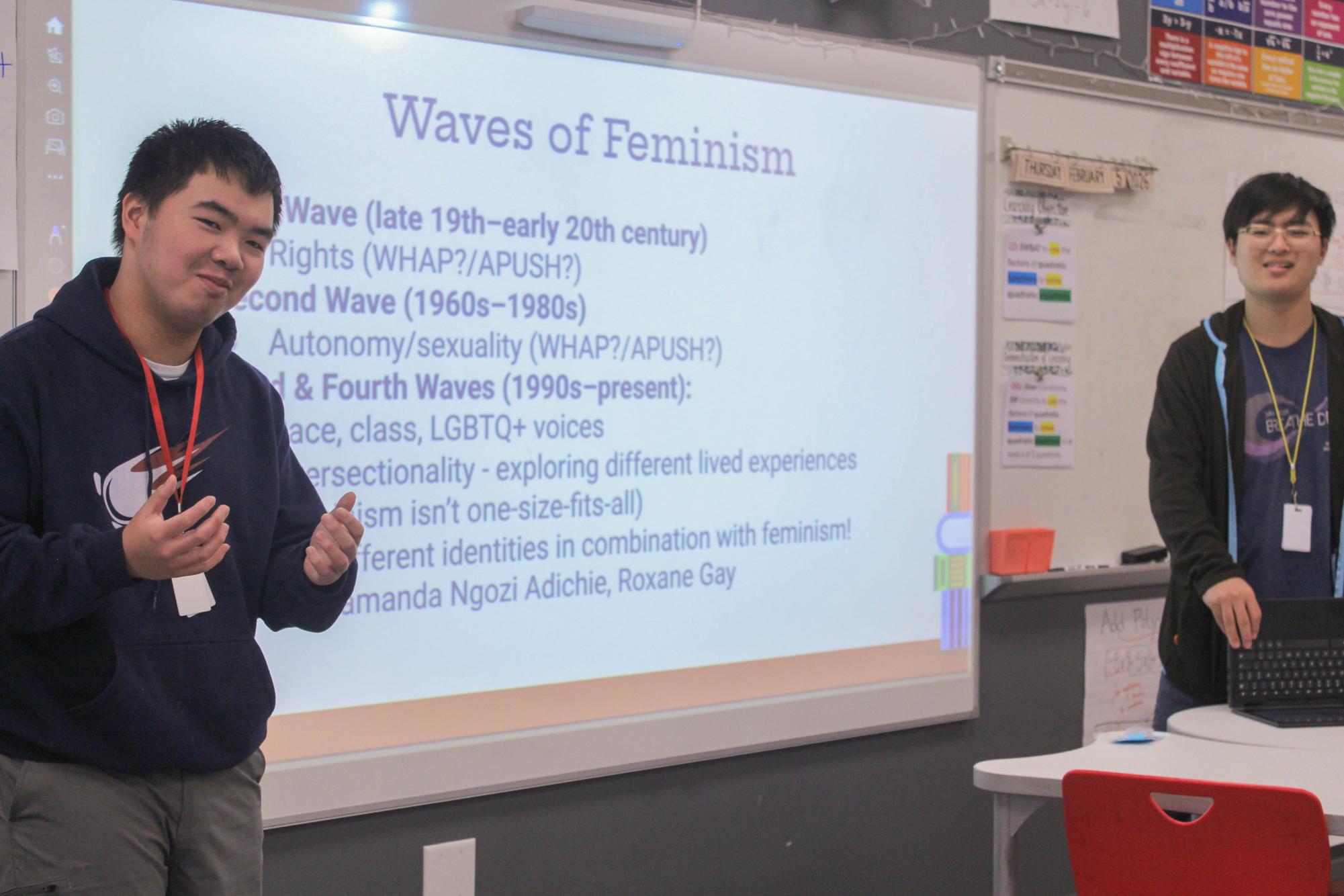
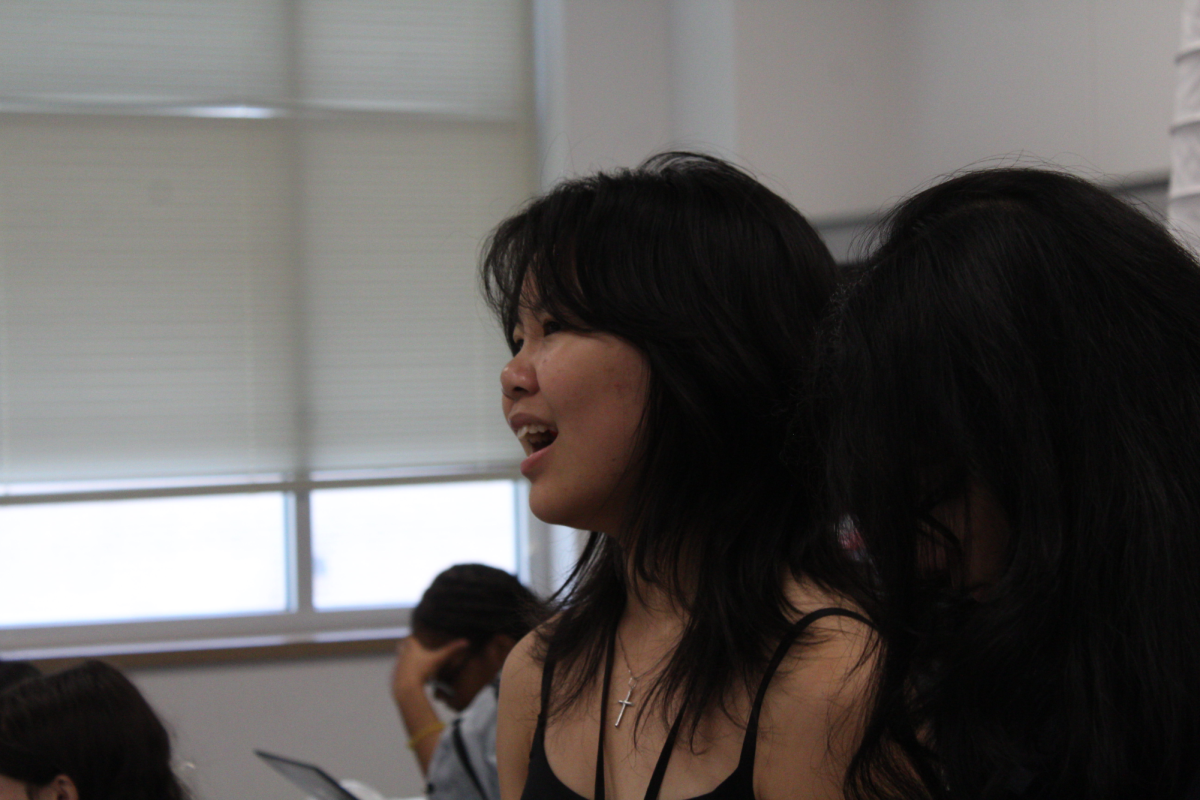
Club officers led W.R.I.T.E. Club members through the waves, novels and authors of feminist literature on Feb. 5 in Room 1704, guiding a discussion on how the movement has evolved over time. Members examined how different eras shaped the themes and messages of feminist works.
Throughout the meeting, officers described feminism as an ongoing movement and discussed how its ideas continue to appear in contemporary literature. They explained that many feminist authors have used their writing to question social norms and address gender inequality.
Junior Oliver Pang joined the club two years ago after learning about it from his friend, junior and Vice President Andrew Chen. Pang enjoys writing “interesting” stories and studying for the SAT during the club’s meetings.
“At the meeting, I learned that feminist literature is very important to society and that its impact has shaped people’s perspectives,” Pang said. “Feminist literature is important for readers today, as it is another way of storytelling and adds to the world’s collection of creativity.”
Officers, including junior and Social Media Coordinator Sophie Tang, offered feminist book recommendations, such as “Hood Feminism” by Mikki Kendall and “The Yellow Wallpaper” by Charlotte Perkins Gilman. Despite the range of novels originating from different time periods, she pointed out that they all shared one thing in common — an empowering voice for women.
“I hope members learn the importance of feminist literature,” Tang said. “Feminist literature has impacted a lot of what we currently know today. Without those books, our world would be quite different.”
Members learned that feminist literature has evolved over the years, spanning over four major waves. The first wave aimed at gaining women’s rights, the second wave called for an end to sexism and the last two waves focused on intersectionality. Feminism is currently in its fourth wave, critiquing issues of gender inequality, promoting empathy and awareness and inspiring young people to continue fighting for rights and equality.
“In the modern world, feminism is a pretty big thing,” junior David Li said. “Even now, I’d say that women still don’t have as many advantages as men. So feminism in literature is a good way of spreading this awareness.”
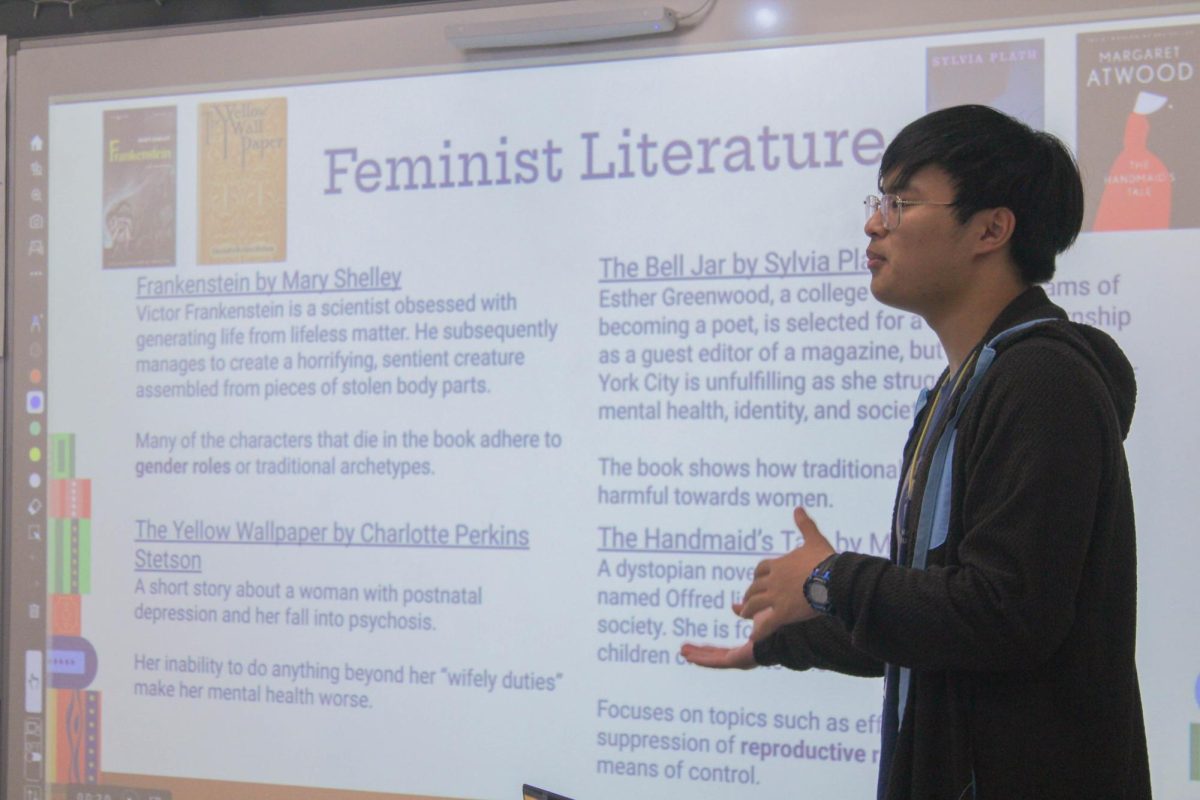
Similar to Pang, Li joined the club because Chen invited him to participate. While Li was aware of feminist novels such as “The Handmaid’s Tale” by Margaret Atwood, he learned about others like “The Bell Jar” by Sylvia Plath.
“Feminist literature helps students learn more about the world around them,” Li said. “So in the future, they would know that this is an important thing to be thinking about. If they’re making any choices that involve feminism, they should apply what they’ve discussed.”
Prior to attending the meeting, he said he was less acquainted with feminist literature and the range of novels it encompasses. Although Li was familiar with the book “Frankenstein” by Mary Shelley, he discovered during the meeting that it is known for being feminist due to its “adherence” to traditional gender roles.
“I thought that ‘Frankenstein’ was all about some lonely guy who wants a companion,” Li said. “Although I knew that the book connected to ideas of scientific progress and ethical debates on scientific research, I didn’t know that it was also connected to Mary Shelley’s views on feminism. I thought that was pretty interesting.”
To stay updated about W.R.I.T.E. Club, join its Remind @bhswrite25 or follow its Instagram @bellaire_write_club.



Emilyn • Feb 26, 2026 at 9:12 pm
love the multimedia!!! so genius
Zara Bukhari • Feb 26, 2026 at 11:18 am
I love how it’s so interactive! Great story