

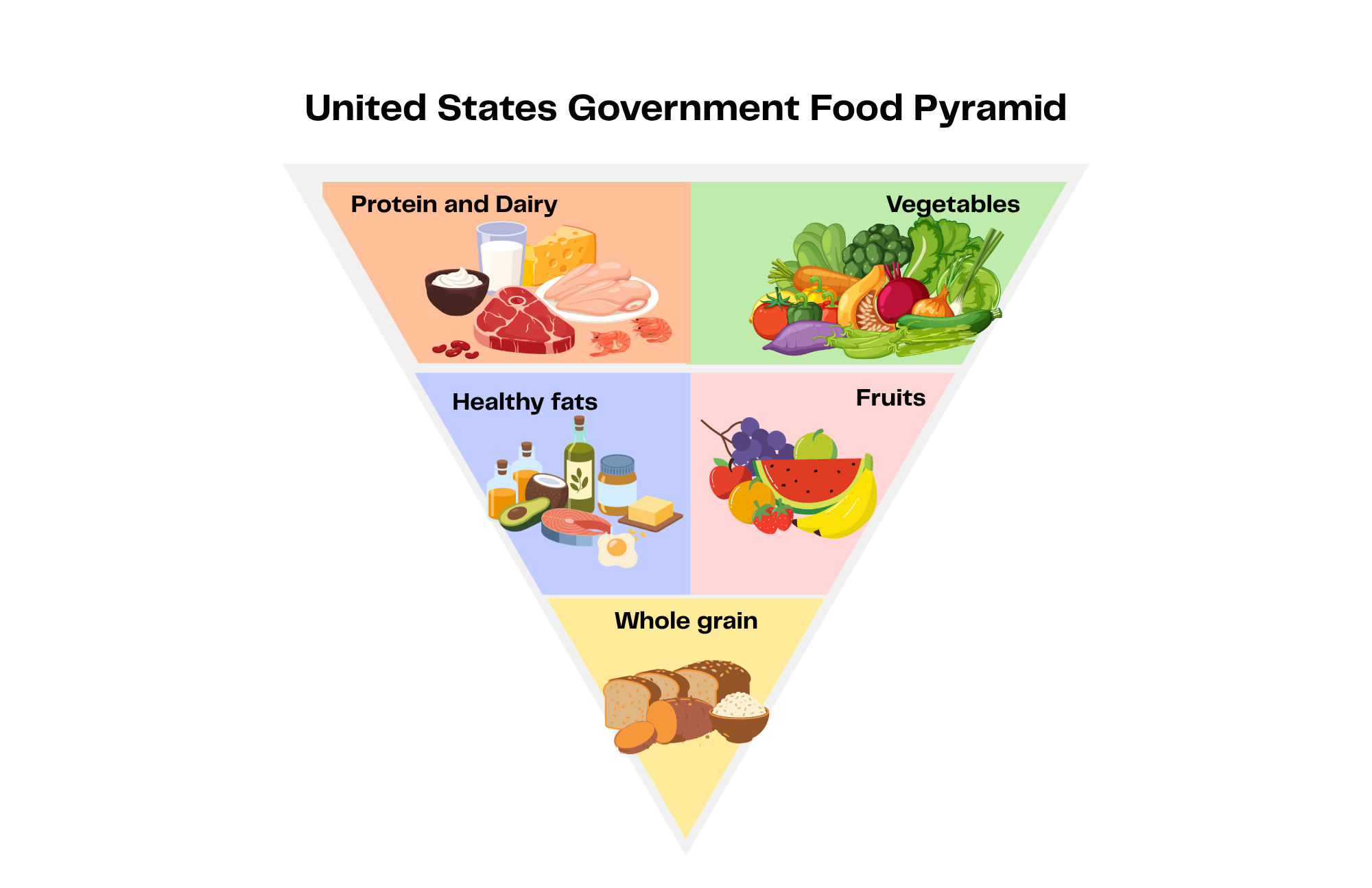
The White House unveiled a new inverted food pyramid for dietary suggestions emphasizing red meat, full fats and fewer processed foods on Jan. 7. Since the announcement made by Health and Human Services Secretary Robert Kennedy Jr., school advocates said changes to cafeteria menus may require increased funding.
Following the food pyramid, President Donald Trump signed bipartisan legislation to implement full-fat or 2% milk in schools on Jan. 14. The U.S. Department of Agriculture will begin implementation immediately.
The newly released food pyramid suggests up to two times the amount of recommended protein intake. Red meat and full-fat dairy products were prioritized in the new pyramid.
According to The University of Texas MD Anderson Cancer Center, red meat does provide a number of health benefits, such as protein and essential vitamins — however, due to its high saturated fat content, red meat is best eaten in moderation. Experts say that while it’s not necessary to completely cut red meat out of one’s diet, limiting consumption can improve overall health and prevent disease.
This is different for individuals with chronic illnesses. Red meat has been linked to worsening chronic and common diseases due to the saturated fat concentration and the potential carcinogens that can form while cooking. Full-fat dairy, while proven to produce health benefits, has an amount of saturated fat that can contribute to health complications.
A current Bellaire staff member currently managing chronic liver damage has been “conscious” about their diet. The source has not consumed red meat for about four weeks.
“I shouldn’t have anything processed,” the source said. “And I really should stay away from, at least, full-fat dairy.”
The source said they felt that their healthcare provider educated them “extremely” well in regard to their condition. However, nearly half of all American adults do not feel the same.
“I would encourage people to do their own research and not just take something at face value,” the source said. “Regardless of if it’s the government or someone selling you a Coca-Cola, they’re going to put their best interest first. But I would encourage people, especially if it’s their own health, to do as much research as they possibly can.”
The source said they’ve “never checked the labels like [they’re] checking them now,” as they avoid all processed foods. This was another standard emphasized by the new food pyramid, which could impact school lunches. Feasibility, however, has been a concern — public school programs rely on an average of $4.70 per meal.
“You can’t fix everything with a magic wand,” the source said. “I worked at a school one time where they offered healthier options, and it’s a question of money and availability. The school has a lot of moving parts.”
The updated regulations focus on limiting ultra-processed foods and added sugars. On one hand, experts say school lunches typically consist of ready-to-eat, ready-to-heat and highly processed sources — new regulations could aid in this. On the other hand, little knowledge surrounding these foods may pose barriers to enacting policies around them.
Food services team lead Veronica Buchanan is responsible for ordering food and ensuring the other staff follow the recipes accordingly. Prior to the food pyramid, the guidelines were set by MyPlate.
“I don’t know why they would even change it, because a lot of kids are vegetarian now, so they’re going to want more vegetables and more fruits versus the meat,” Buchanan said. “This has been a crazy year for everybody.”
The new food pyramid emphasizes full-fat dairy. According to Buchanan, the lunch line currently serves one full-fat and one reduced-fat milk option. In addition, the lunch line will begin serving strawberry milk in February.
“That more than likely would change as well because we have to follow a strict recipe,” Buchanan said. “We have to follow the rules and regulations. We have to go with the flow because we are being monitored.”






Davis Adams • May 3, 2026 at 9:39 am
Ishani, it was a pleasure to design this page in the print — excited to see where this story goes!
Alav • May 2, 2026 at 11:18 pm
Thank you for covering this Ishani! Well done!