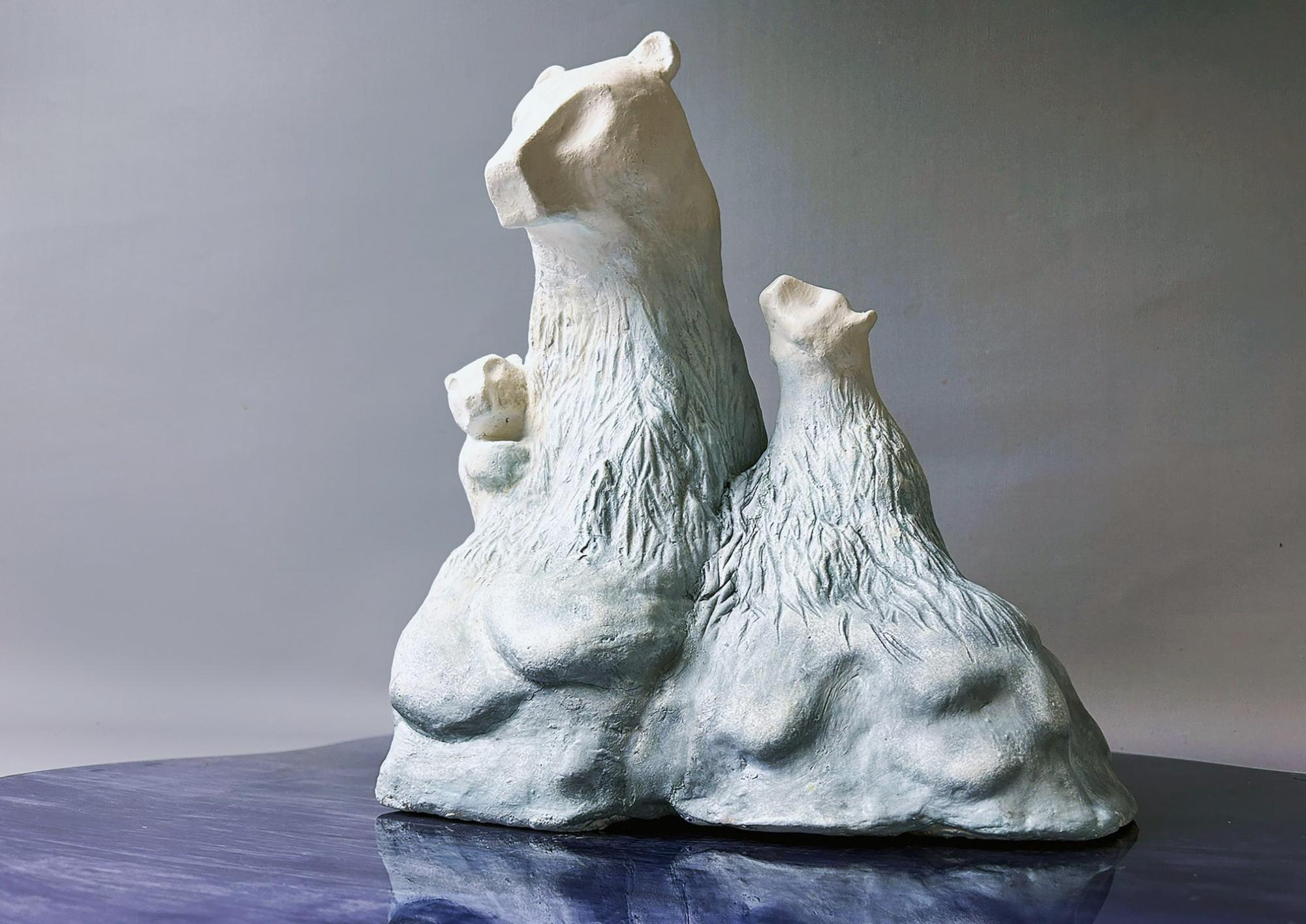
Over the course of 30 hours, Li completed his 2026 Scholastic sculpture piece: an augmented family of polar bears “melting down” on an iceberg.
“It felt refreshing to win, especially since I think my project is technically much better than last year and has more depth,” Li said. “I’m pretty proud of the way it turned out.”
(Provided by Ryan Li)
Li’s piece captured not just his love for animals, but also the deepening environmental crisis emerging with global warming.
“I frequently feature animals in my pieces because I believe that they can more easily symbolize certain feelings or traits that a human figure or abstract form could not,” Li said. “Art can appeal more to the general public than a report or statistic, [because] it really has that ability to grab your attention and evoke some sort of emotion in you.”
Li expressed his take on the broader “societal issues” behind the melting iceberg, using it to draw attention to the habitats destroyed by global warming. He used a white-to-blue gradient while applying color, symbolizing the ice melting into water.
“I also wanted to represent how a crisis can reinforce close bonds,” Li said. “In the case of my art piece, the ‘crisis’ would be global warming, and the bears all melting into each other show how a family sticks together despite hardships.”
Throughout Li’s creative process, Zu has led him to explore the deeper message behind his sculpture.
“Ryan doesn’t talk much, but he talks to me through his work,” Zu said. “So when he shows me his work, I understand what he’s thinking as well. Visual art is like our communication channel.”
Li used a combination of clay, Model Magic, underglaze and acrylic to sculpt and paint his piece.
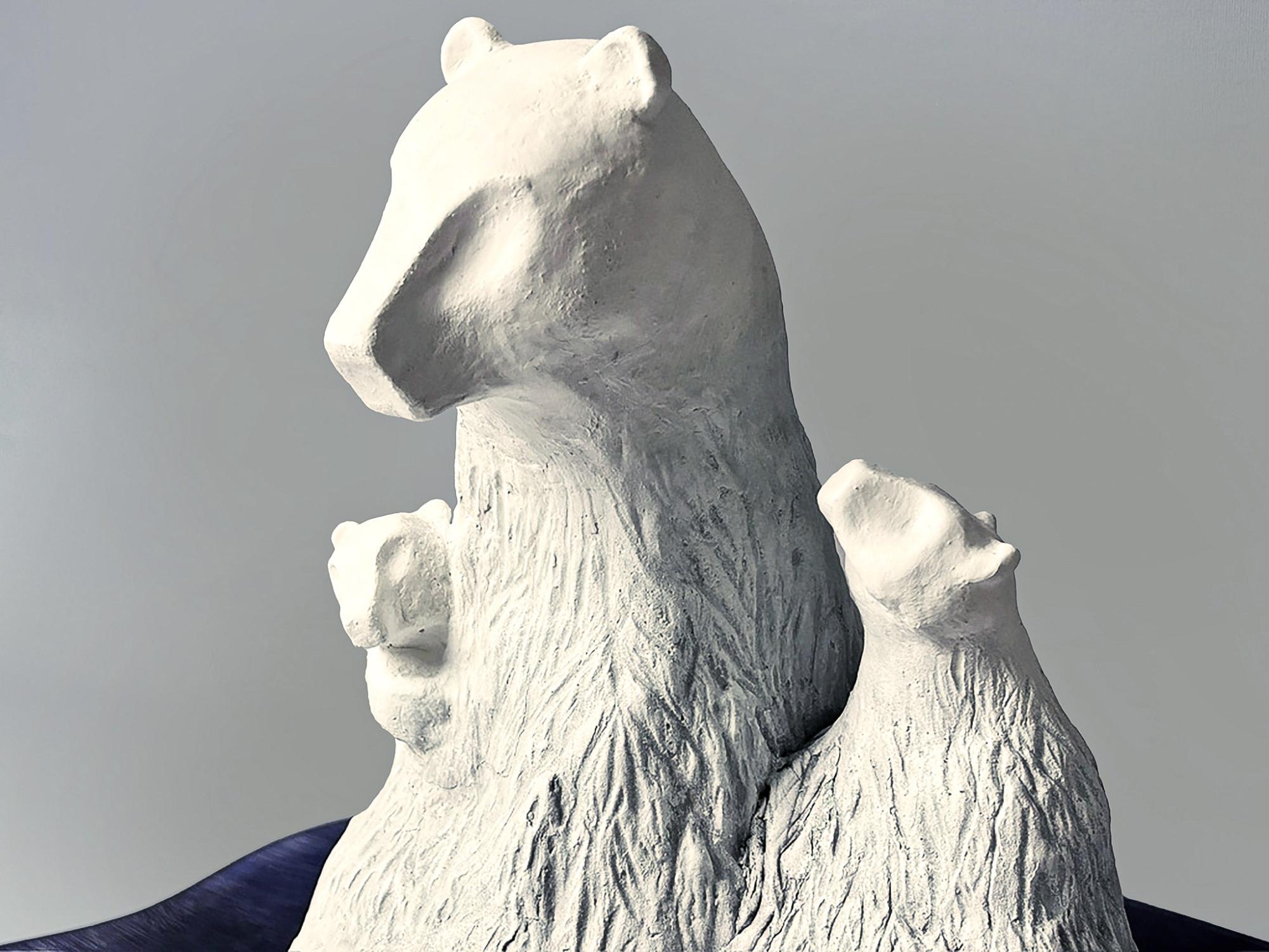
Li didn’t originally plan to add a melting effect or a mountainous texture. However, working with sculpture allowed him to “more easily” alter his piece and add multiple dimensions and perspectives that are not attainable in 2D.
His preference for ceramics as his method of expression can be attributed to the creative freedom and flexibility he feels with the medium.
“In 2D, you’re confined to a set space,” Li said. “Once you put something down, it’s more permanent. But with 3D, you have greater freedom to change.”