
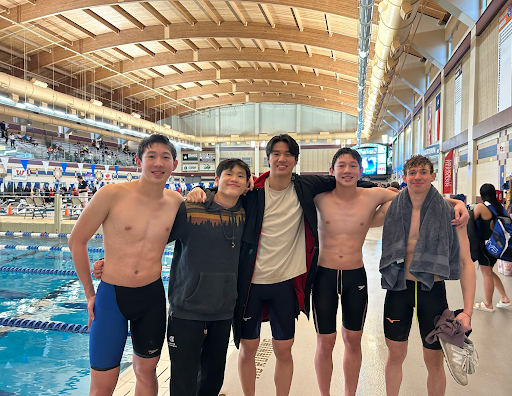
“A lot of people pick up swimming to make sure they don’t drown.
Beyond my swimming for safety, my brother was also doing it as a competitive activity at the time, so I picked it up too. I’ve been swimming since I was 9 years old through various club teams and started swimming for school teams in seventh grade.
I think a lot of the rewarding moments come from both really tough practices and competitions when I think ‘Wow, I pushed myself a lot.’ For hard practices, you see the set beforehand and really dread swimming through it, but after it’s done, you feel proud of yourself.
Besides my freshman year, I only swam morning practices before school. I really enjoyed swimming in the morning because my friends and I go in the same lanes, workout and have fun. We get to talk between sets and race each other in the pool sometimes.
The meets feel more friendly than competitive, because we get to hang out with swimmers from other schools, especially Lamar. I’m a sprinter, so my races last less than a minute in an 8-hour meet. A lot of the time I’m just lying on my towel with my friends either scrolling, talking or just eating.
I did a lot of relays, which have four teammates in a race, and I anchored some of them, meaning I was the last person of the four to swim. Typically the faster swimmers start and end the race. With that kind of pressure, you try and set a goal for yourself before your turn, like ‘I want to catch up with this guy’ or ‘I want to continue being in front of this team.’ The relays are especially competitive and exciting, because they are really close. It gets really loud — I can feel the screams of the spectators and teammates vibrating through my swim cap.
When I anchored the relay, I’d touch the wall to get ready to dive into the pool. I’ll always remember looking up right before to see my teammates cheering for me. At that moment, I felt proud to be on this team. Regardless of the results, I just feel really lucky to have my teammates supporting me.
One thing that made my swimming career slightly different from others is that I left and went to train solo for quite a bit of time for club swimming post-COVID. I would just go to the JCC and swim my own sets since they have a clock at their pool. Going from solitary practices outside of school to being on my high school team was very meaningful for me. I had a team to train with at Bellaire, compared to outside of school where I didn’t have the same people. That helped me appreciate how important a team was, not only in terms of discipline, but also mentally. You realize there are people there for you. They support you along the way. When you’re tired, they’re also tired, but they push you.
Senior year, you have a lot of last things — your last meet, last district championships. Especially now, beyond the competition, you just want to share your moments with your friends. I think those [moments] matter more than solely the competition itself. That’s something you don’t appreciate until senior year.”