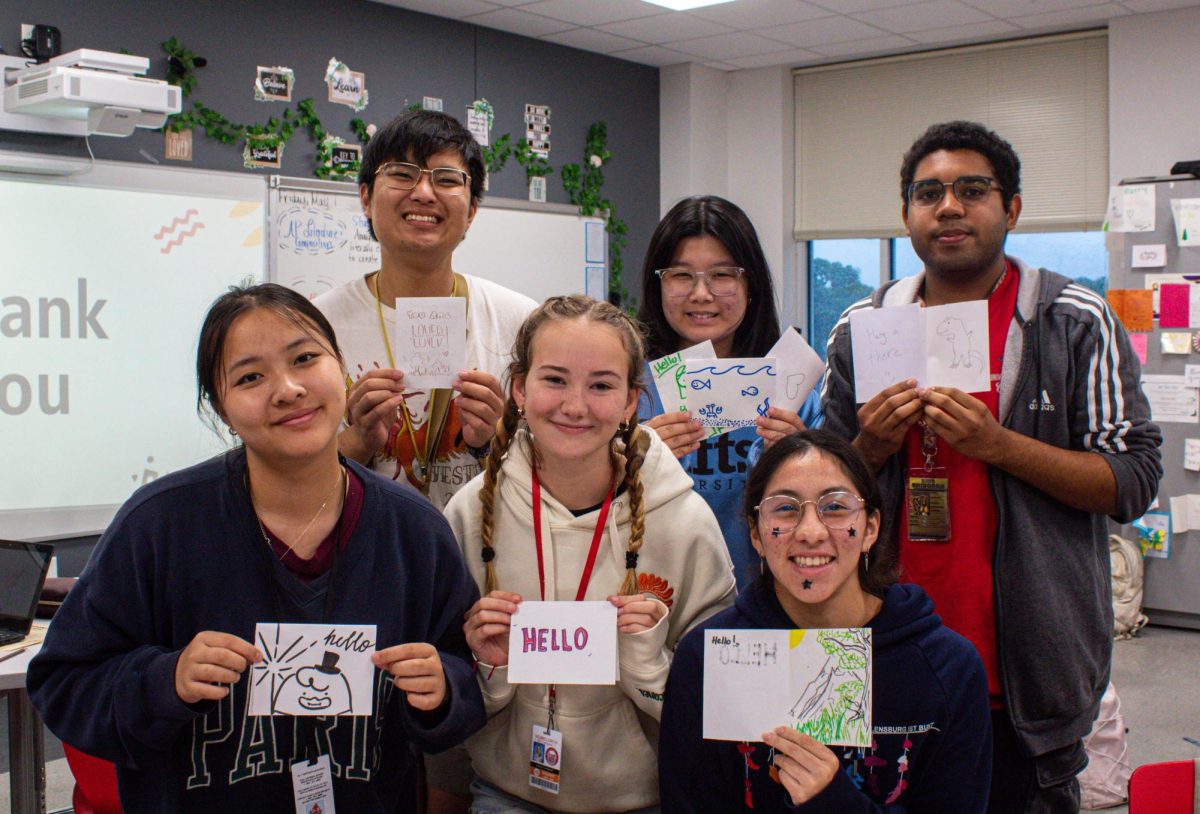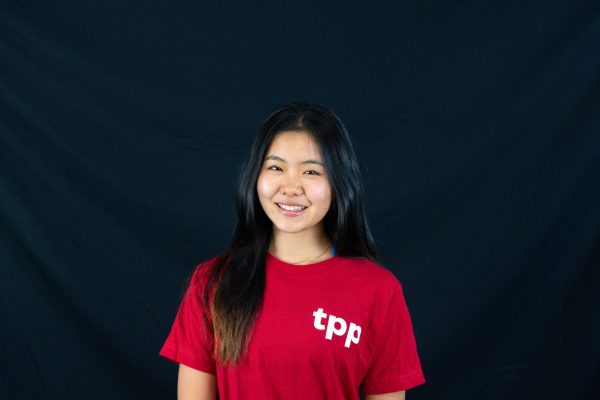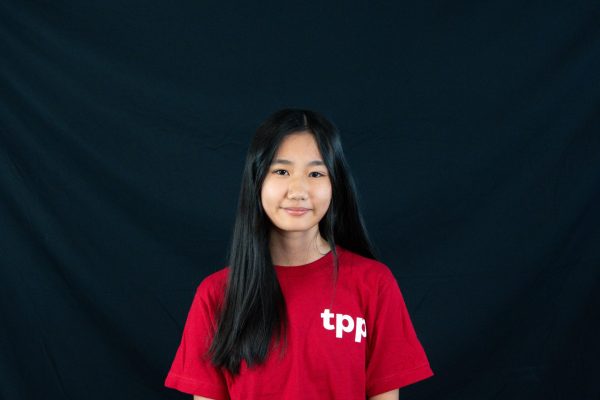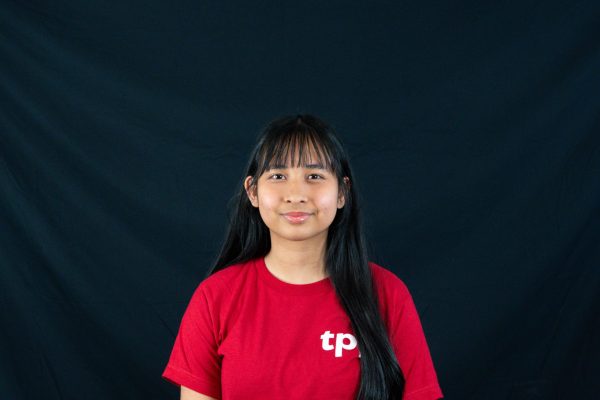
When the bell rings for sixth period on Feb. 4, just five students walk into IB Biology teacher Dr. Sarah Lach’s classroom. They are nervous, excited and armed with over 1400 dog-eared pages of the Campbell Biology Textbook.
Today at 3 p.m., students across the nation took the USA Biolympiad Open Exam (USABO). The USABO is considered one of the most prestigious biology competitions for high school students. With over 10000 students competing nationwide, the exam demands strict supervision and secure testing conditions. Each school can register any number of students for a one-time fee of $125.
Lach administered the exam as a second-year proctor. Last year, two to three students backed out of the competition at the last minute due to nerves, so Lach is excited to have more students take the exam this time around.
”I feel a little bit nervous for them,” Lach said. “A little bit of last-minute hecticness, but even if they don’t perform as well as they hope, it’s still good that I know they all tried. That’s really important.”
The USABO covers a large breadth of biology topics. The test is designed to go beyond rote memorization to critical thinking and analysis. The 50 multiple-choice questions, which must be completed in 50 minutes, span seven topics: animal anatomy and physiology, cell biology, genetics, plant anatomy and physiology, ecology, ethology and biosystematics.
Although exam preparation at Bellaire is primarily through independent self-study, Lach invites students to stop by her room during lunch with any questions or to discuss any confusing material.
“There’s no real downside for people who are already taking it at this point,” Lach said. “You can basically throw the bad score away. Before the exam, I don’t recommend cramming. Review topics briefly, and then just breathe. Don’t panic. There’s no problem. If you do poorly, try again next year.”
From the competition pool, only the top 10 percent of students advance to the semifinals, which is also administered at the competitors’ schools. The top 20 semifinalists are invited to a free training camp at Harvard University for additional support and guidance for the national finals. Finally, the top four students from finals are selected for the USA Team to compete in the International Biology Olympiad in Lithuania, alongside over seventy countries.
Junior Aayush Khadse is competing for his second year. He utilized a variety of study techniques, ranging from tutor sessions from a past nationally-qualified competitor, to online practice questions, and the official USABO textbook by Neil A. Campbell — with “anything and everything about biology.”
“After I took my first practice exam, I was able to see that my score was pretty good,” Khadse said. “It was the first point I realized, ‘Wow, my work is actually paying off.’ That’s when it became more of a game than a grind.”
Khadse’s score of 90 out of 120 questions on the semifinal exam last year qualified him for the national competition. While he was unable to attend the mandatory training camp at Harvard University then, he aims to qualify once again and participate in the camp this year.
“Obviously, there’s some anxiety and fear, but I’m relatively levelheaded,” Khadse said. “I’m confident in my ability to qualify for the semifinals. I think once that happens, and I’m praying it does, then I’ll be a lot more worried.”
For other competitors, the upcoming exam fostered more uncertainty. Sophomore Katy Wang also studied “intensely” using Campbell’s book, but still felt unsure about how her preparation would translate on test day.
“You could fail if you’re unlucky or if you just get really nervous,” Wang said. “I’m kind of excited, but I’m also kind of worried, because I still feel like I could always do more to study.”
Wang approached the USABO this year with revised study techniques. She achieved a Certificate of Merit last year, which is given to the top 30% of testers on the Open Exam.
“I feel like I kind of lacked the work ethic to do really well on it last year,” Wang said. “I’m not sure if I’ll perform better on the exam this year, but I’ve been doing practice tests. The content on the test is just so complex and changes each year.”
Despite the academic pressure that often accompanies the USABO, Lach appreciates how the competition is an accessible avenue for students interested in biology-related careers to explore the subject early on.
“I don’t really see students doing much with just biology in general,” Lach said. “I like that this is a way for them to get more in-depth.”
For Khadse, taking AP Biology in his sophomore year felt like the end of his high school biology career. USABO was his pathway to continue pursuing biology in his future aspirations, especially in pre-medicine courses and exams such as the Medical College Admission Test.
“I can forget about bio altogether or find some way to incorporate it in my everyday life,” Khadse said. “I think it’s good to learn a lot of that material because it’ll just keep my foundation strong, so I’m not forgetting basic biology.”
Lach ultimately hopes to provide stronger resources for the Olympiad and biology courses in general by hosting club meetings.
“I think it would be nice if we could get together and go through some aspects of biology lessons,” Lach said. “It could also be helpful for people who want to take AP Biology to get a little bit of preparation before they actually start the course.”
The official open exam scores will be released on Feb. 23 in the Teacher Resource Center portal. For those who qualify, the semifinal exam will be administered on March 4.