
HISD is implementing and expanding new Career and Technical Education (CTE) courses into its curriculum from its board meeting on Dec. 11, which will be added next school year.
HISD started significantly expanding its CTE program in the 2024-25 school year, adding courses such as Entrepreneurship and Health Informatics. The CTE program began in order to provide opportunities for students to take on high-demand careers through programs and hands-on learning. Students in CTE programs are able to graduate with industry certifications and earn college credit or work directly out of high school if they so choose.
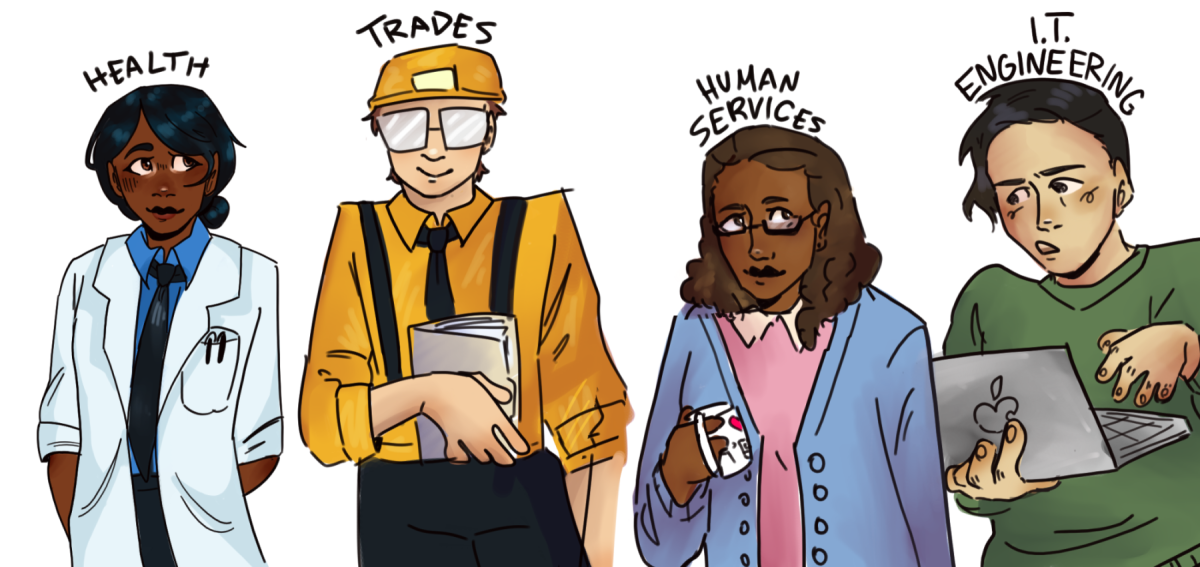
The expanded CTE courses include extensions in the fields of information technology, engineering, health, human services and skilled trades. More specifically, programs of study that have been added in these areas comprise of cybersecurity and networking, manufacturing, drones, robotics, diagnostic and therapeutics, pharmacy, culinary, teaching and training, automotive, construction and much more.
“They’re all designed to give students experiences that get them ready for high-demand, high-wage jobs and certifications that are aligned with the future workforce,” Trey Serna, HISD’s coordinator of communications, said in an HISD video.
These courses will be offered exclusively at the Barbara Jordan Career Center (BJCC) for students from multiple high schools, such as Heights High School and Waltrip High School, emphasized by Trey Serna in an HISD video.
“That’s our centralized CTE hub,” Serna said. “That means more seats in high-demand programs, and students can start career training as early as ninth grade.”
The selection of these courses was based on findings to produce jobs with a living wage of more than $45,000. HISD looked at statistics of annual salaries in Houston as well as annual job openings, with the information technology field leading the way.
According to HISD during community presentations, the BJCC designs students’ schedules for attendance at BJCC two to three days per week without missing any work at their home campuses. Students are also provided transportation to the BJCC from their home campuses, potentially causing conflicts for CTE courses only offered at BJCC, such as bus malfunctions and travel time miscalculations. Enrollment at the BJCC is projected to grow to nearly 4000 students by the 2028-29 school year, while keeping class sizes small with staggered schedules.
“The goal is simple,” Serna said. “Open more opportunities, reduce wait lists [for CTE courses] and give our students access to state-of-the-art facilities and real world skills.”
Johnedra Ledet, a CTE Health Informatics teacher at Bellaire, is eager to see the changes in HISD’s CTE program. Ledet has previously taught other CTE courses such as Fundamentals of Artificial Intelligence and now prepares students to enter the medical field through building foundational knowledge for medical careers.
“My students have a strong interest in pursuing careers in the healthcare profession, and my goal is to expose them to the expectations, professionalism and real‑world experiences found in medical environments,” Ledet said. “Twice a month, students dress in medical scrub attire, which helps them understand the standards of professional appearance and prepares them for future clinical settings.”
Ledet has also had many guest speakers, such as nurse practitioners, phlebotomists, medical sales representatives and a scientist come to her class in order to provide students experience in listening to their journeys to the medical field.
“These interactions give students the chance to see the many different paths within healthcare and help them imagine the possibilities for their own futures,” Ledet said.
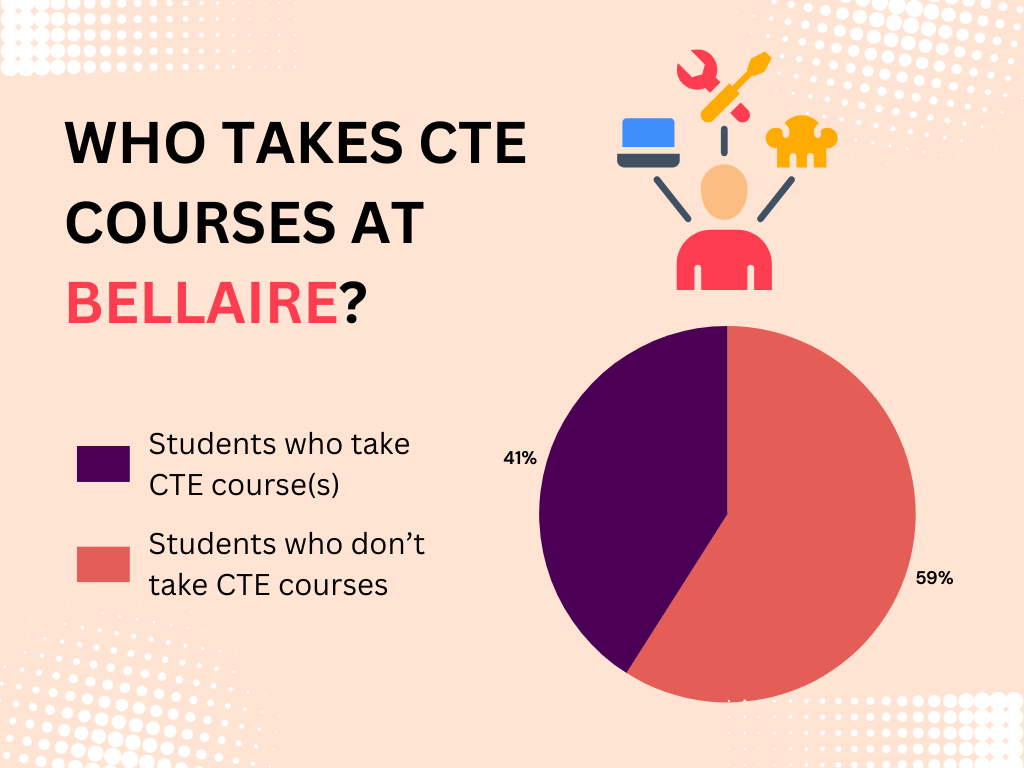
With CTE enrollment rapidly growing to 44,840 students in HISD, the addition and expansion of new CTE courses, specifically drones and robotics, is very exciting, according to Ledet.
“Growing up, I didn’t have these kinds of opportunities. That’s why I’m truly grateful to be part of a program that provides students with real exposure, hands-on learning and meaningful preparation for life after high school,” Ledet said. “I’m also excited about the new programs being added to the CTE department, including robotics and engineering, which continue to expand opportunities and strengthen Bellaire’s commitment to preparing students for college and career pathways.”
Despite Bellaire not being on the list of schools connected to the BJCC, Ledet believes that these new CTE programs of study and expansion to the curriculum can leave a positive impact on Bellaire and its students.
“I’m fortunate to work under the leadership of Principal Niggli, who consistently prioritizes student needs, academic growth and access to advanced career pathways,” Ledet said. “His support of innovative programs and his commitment to listening to students allow our CTE department to grow and evolve in powerful ways.”
Similarly, Alaa Hourani, the CTE Networking Systems teacher, expresses her appreciation for the inclusion and expansion of more CTE programs. Hourani has previously taught other courses such as Digital Media, Principles of Information Technology and Computer Science. The current course she teaches is about topics ranging from system programming languages to JavaScript. Hourani thinks the new courses are very nice, especially due to the new age of AI technology.
“I was very surprised in the beginning, because it’s really advanced and very nice courses,” Hourani said. “In two or three years, they will focus on the new courses more than web development and design, because we are using AI right now, so no need for anything from the past.”
Encouraging more enrollment in CTE, HISD has seen more graduates receiving industry-based certifications (IBC), increasing from 15% of graduates in 2020 to almost 40% of graduates in 2023, while continuing to grow. Hourani also believes that these CTE courses will affect future careers positively, with high salaries and essential technical skills.
“You are preparing students to be skilled, professional and to have a good knowledge about the new technology,” Hourani said. “You are preparing very nice, prestigious students for college and for jobs.”
In addition to new CTE courses in drones and robotics technology, Hourani wants HISD to focus solely on building programs related to AI, since most new technologies are connected to the internet of things (IoT), as more than 18 billion devices are actively connected to IoT.
“Why doesn’t Bellaire have something more AI-related?” Hourani said. “We have just one course about AI. We hope that we have some other advanced courses next year at Bellaire High School, like Applied Data Analytics. Students should practice how to analyze, visualize and understand data, then use this data to predict something in the future and understand the different types of AI, not just using it.”
Hourani hopes students will dive deeper into what AI technology really entails rather than just using it to their advantage, unaware of how AI actually works.
“A student here is using ChatGPT, Copilot and Gemini, but they don’t understand what’s going on behind the scenes,” Hourani said. “How can I do that? How can I create something like that? How to analyze my data, how to understand my data, how to make my data to predict, to help use my data to predict new information. This is what we are missing right now.”
Encouraging the path that HISD is headed toward currently, Hourani sees a productive outlook with CTE programs affecting Bellaire and its students specifically, as reports show lower dropout rates and higher passing rates on end-of-course exams for CTE students.
“This is a very nice advantage,” Hourani said. “We have very smart students. They can expand their knowledge and understand everything. I support having very nice programs like that.”
Although the new CTE courses are seen as a positive sign for the future for many, Julie Tang, a senior taking the CTE Programming and Software Development course, believes some of the new courses are too niche.
“I think they are good for what is needed in some careers,” Tang said. “For robotics, I can understand why one student might choose to take the CTE course instead of joining the club due to time constraints, but if someone is interested in robotics, I feel like they would’ve joined the club anyways.”
Despite these courses geared towards a specific career not everyone may want, Tang sees these CTE courses giving a significant advantage to those who want to pursue a career in a high-demand field.
“I think CTE courses as a whole have definitely helped and hurt Bellaire and its students,” Tang said. “Many students are focused on their GPAs and want to take courses that will help them. The only CTE course, to my memory, that offers honors-level courses is Computer Science. This limits a lot of what the students would choose when it comes to CTE courses. However, for other students who do choose to take them, they are learning an important skill that could help influence their career choice.”
For more information about HISD’s CTE plans and curriculum, visit their website at https://www.houstonisd.org/cte.





zara bukhari • Feb 22, 2026 at 12:54 pm
excellent story! love the graphics and content, great read
Bethel Kifle • Feb 21, 2026 at 8:29 pm
Great story Max! Very informative.