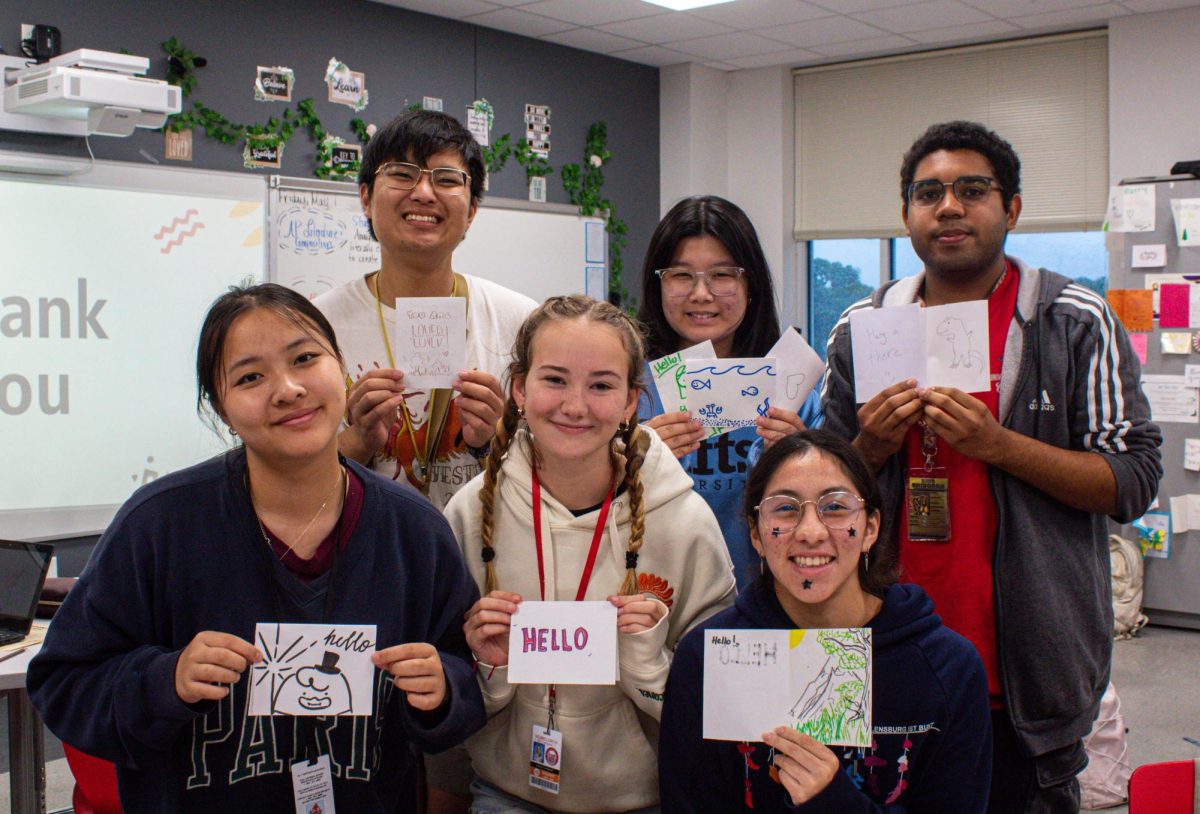
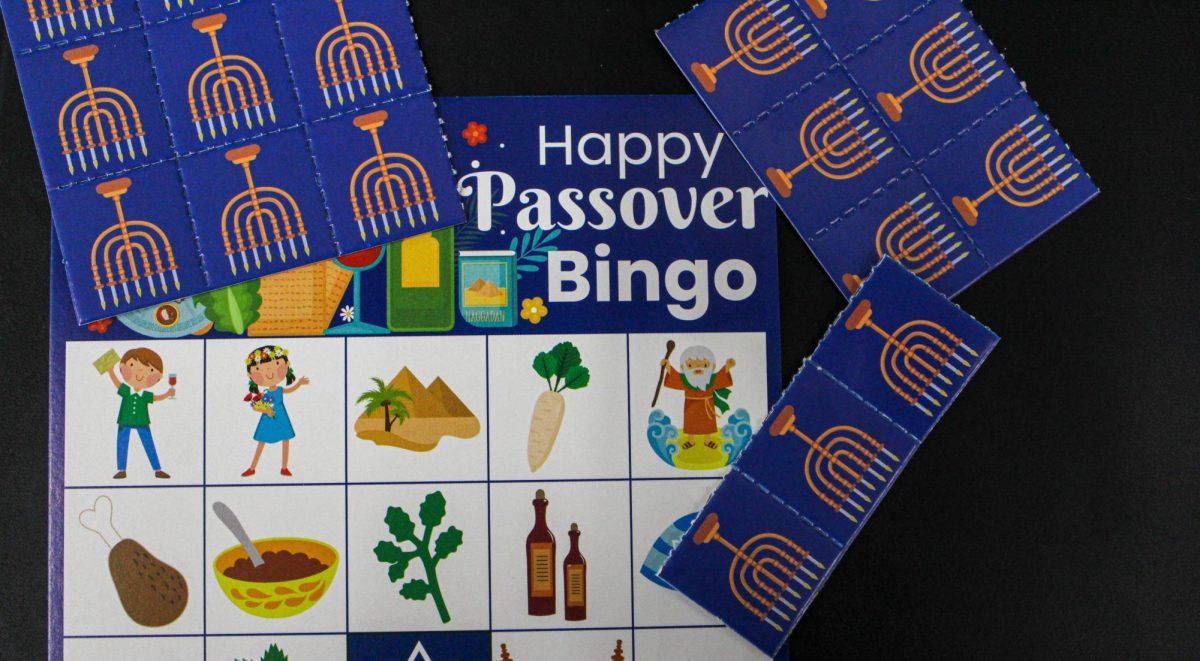
With Passover set to begin at sundown on April 1, the Jewish Student Union (JSU) organized a meeting on Wednesday, March 25, where over 30 students played Passover-themed bingo and discussed their individual Passover traditions.
Passover, or Pesach, is a Jewish holiday that commemorates the Jewish people’s exodus from slavery in Egypt. The name Passover stems from the 10th plague, when the angel of death “passed over” the Jewish children’s houses, sparing their lives.
Every year, Jewish families commemorate this exodus by hosting a Seder, which is a lengthy dinner, on the first and second nights of Passover with 15 steps, derived from the Hebrew word for order. The 15 steps of the Seder retell the story of the exodus from Egypt, such as Karpas, which entails eating bitter herbs and matzah. Outside of the 15 prescribed steps, families have their own unique traditions, foods and customs.
Every year, junior Eliana Weiner celebrates Passover at a Seder with her extended family, with their own traditions, such as placing unique foods like an orange on the table and singing traditional songs such as the “Chad Gadya.”
“We put an orange on the Seder plate because of an old story of the first bat mitzvah,” Weiner said. “During ‘Chad Gadya,’ each person in my family is assigned a character who we act out. Some are easy like the dog and cat, but when we get to the water or the angel of death it’s fun to see how creative everyone is.”
Weiner sees Passover as a time for family gatherings and being “thankful” for the freedom of the Jewish people. Additionally, junior Ava Silk uses Passover as a time to reflect on miracles and practice gratitude with her family, even with the strict food limitations during Passover.
“My mom makes delicious matzah toffee candy,” Silk said. “It’s basically matzah with homemade toffee and chocolate, topped with either sprinkles or nuts. Since we can’t eat wheat, we also make latkes because potatoes are a good alternative for us. One of our other traditions is partnering with the younger kids to search for the afikomen during the Seder.”
According to junior Isabel Marblestone, a family Seder is characterized by having the opportunity to spend time with family during a busy time of year, and she appreciates that Passover forces her family to sit together and talk for hours on end.
“I do Passover with my extended family, including my grandparents and cousins,” Marblestone said. “We do the first Seder at my grandma’s and the second at my aunt’s house. My favorite food at both Seders is always matzah ball soup.”
Sophomore and JSU member Maya Holliday also carries out distinctive Passover traditions to honor her family’s Sephardic traditions during her family’s Seder by making beans, particularly garbanzo, kidney and black beans. Aside from the food itself, Holliday’s passover traditions allow her to spend time with her loved ones and reflect on her family’s past, through a reading of the book used during the Seder called the Haggadah.
“The Seder is always at the aunt with the youngest kid’s house,” Holliday said. “We use the Haggadahs that my grandfather got from our synagogue with his name in them, even though he passed away 16 years ago.”
According to Holliday, Passover holds a deep meaning for the Jewish people with both a “literal victory” and a separate emotional tie to the balance between good and evil.
“Passover is a holiday with two meanings,” Holliday said. “We not only celebrate leaving Egypt, but we also take time to mourn and reflect about the time we were slaves, which is important to fully understand both the dark and the light aspects of our history.”
Junior Sierra Little’s Passover Seder is full of traditions, games and unique foods, such as a dessert Seder plate alongside the real one.
“My mom puts a whole bunch of candy on the plate trying to copy the look of the regular Seder plate,” Little said. “She puts a chocolate egg on the plate, as well as a pretzel covered in white chocolate to resemble the shank bone.”
According to Little, dessert at her family Seder is not just a time to enjoy sweet treats, but also a time to play games with her family. One of the desserts at her Seder are candied fruit slices, which come in four flavors. At the Seder, each family member takes turns guessing the flavors blindfolded.
“Most people generally guess around two of the flavors correctly, but my mom is really good at the game and gets all four colors correct every time,” Little said. “It’s pretty fun but definitely harder than you’d think.”
According to Little, Passover is a reminder of the resilience of the Jewish people as they faced hardships not only in Egypt, but even now in present times.
“Even through the hardships we have faced in the past, surviving the slavery of Egypt, and the challenges we face every single day, we have persevered and are still one community today,” Little said. “This joyous holiday doesn’t erase what we have gone through, but it celebrates who we have become, facing difficulties but surviving and thriving at the same time.”
To follow JSU’s future events and learn more from Bellaire’s Jewish student body, follow their Instagram @bellaire.jsu or attend their meetings every Wednesday in LGI 2.