

Indian or American.
Not Indian-American.
Indian or American.
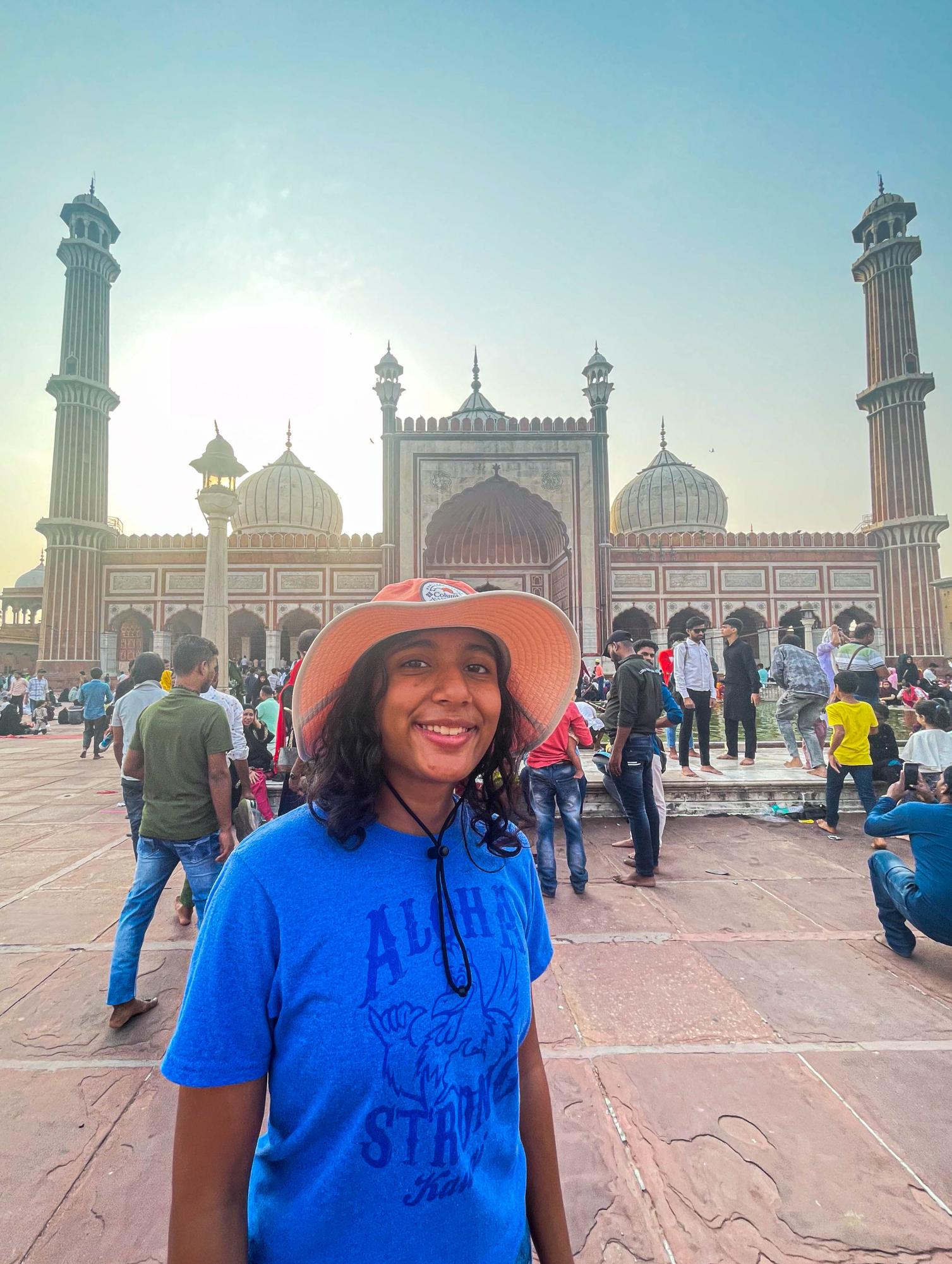
Growing up in a predominantly black and white suburb in Atlanta, Georgia, there were very few people like me my age. I never met another Indian-American who wasn’t half-white or Christian. Naturally, I became like them. I played into being “American.” I even went to mass during Easter once just to feel like I could fit in. I can still remember how unfamiliar the wooden seats felt as someone who had only been sitting on rugs or cold marble in temples.
I am not the only one who has gone through this dilemma. According to a study conducted by the Asian American Foundation, 80% of Asian Americans feel like they don’t belong. So when my mom told me in the seventh grade that we were moving to Hyderabad, India, I was ecstatic. “Finally,” I thought. I would get to be around people who looked like me, who were Hindu like me, who watched Bollywood movies like me, and who’s favorite dessert was gulab jamun like me.
I remember getting onto a sleek plane from Qatar Air, thinking “this is going to be my life now.” No more Six Flags, no more World of Coca Cola, no more Chick-fil-a around the corner. But I would be getting so much more, right? More family, friends I could relate to — a year-long vacation.
I was sorely mistaken.
When I got to India, the first thing I did was lay in bed. I had gotten COVID-19 and — when combined with the jet lag — I became a vampire, with a sickly appearance and odd sleeping hours. I had already missed the first two months of school because I was celebrating my aunt’s wedding in late August and my mom had to finish out the year at her old job, so I would have to miss even more school.
Now looking back on it, I wished I had not even gone to school at all. At first when I joined, everything was normal. People had been nice to me and asked surface level questions like “Do you like cricket?” and “What books do you like to read?” I was like a shiny new toy that everybody wanted to know.
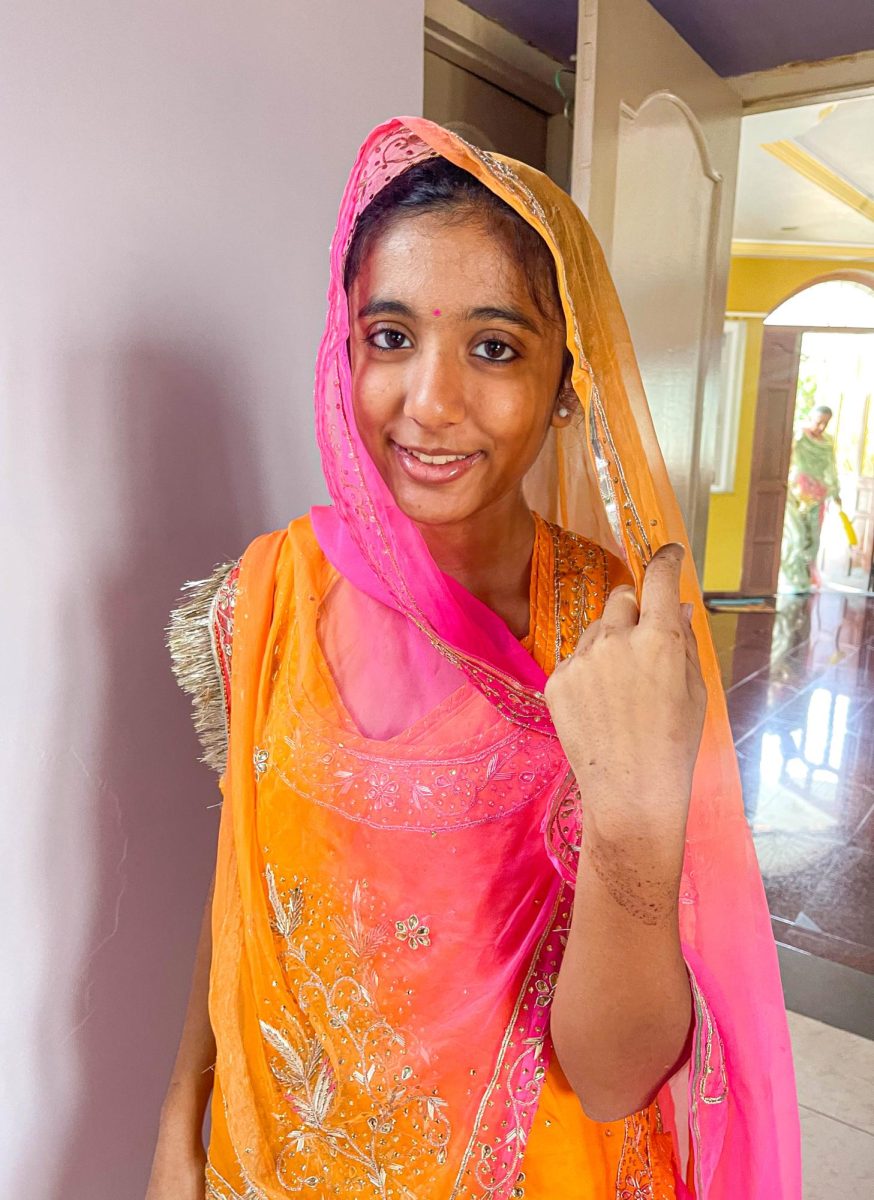
I suppose everyone thought there was something special about me, so I leaned into being “Indian.” After being celebrated and appreciated by my friends from India, I adopted cultural customs that helped me feel more at home. I wore a bindi every day to school and an evil eye bracelet. Outside of school, I even code-switched into an Indian accent so people would think I was originally from India.
However, after a while, the magic surrounding my persona faded and people started to treat me like an outcast. For example, throughout the year, the stress of my social life combined with the pressures of school had caused me to get multiple styes. A girl who I had been very close with said, “God, what is that thing on her eye? She looks like an alien.” And, I remember another girl telling me, “You might get away with that in America but not here.” I had been talking about my family and what it felt like for us when we came here. But because her own parents’ marriage had ended in divorce, she interpreted my words as if I were saying, “I am better than you because my parents are still together.”
Many others were like her too, and no matter how hard I try to understand why they did what they did, I will not forget the horrible things they put me through. I had been verbally and physically abused on several occasions, and, despite all of the harm they had caused, they had managed to convince even the administrators that I was mentally unfit and responsible for my own pain.
But I think that the attitude I had going into India was a large part of the problem. I was too concerned with conforming the same way I had done in America that I forgot who I was. I had been tired of feeling like a “forever foreigner,” who would never fit in, and I thought that going back to my ancestral country would give me the acceptance and community I had yearned for.
Though, many people do not share this view. According to the Pew Research Center, only 12% of Asians would choose to go back to their home country and stay there. After going back to my home country, I can see why.
Here in America, we Asians feel we are living the dream and do not want to give up the opportunities being presented. Living in both America and India has taught me that fitting in is a challenge everywhere, and I should live in the most inclusive community possible if I am going to face it. The overall culture in India is very tradition-based and has not changed a lot over time. Combined with immigration patterns that are very different from a place like America, this has, in my experience, fostered an unwelcoming homogenous Indian society. This is in slight contrast to America, where immigrants are a much more common occurrence.
Yet, in spite of all of this, Asian Americans are still treated very similarly to the way I was treated in India. Asians make up 7% of the US population, and we are still seen as a threat to society. Events like 9/11, Pearl Harbor, and the COVID-19 pandemic have created a negative stigma surrounding Asians, riddling today’s society with Asian hate and racist stereotypes, with Asian hate crimes reaching values double to that before the pandemic.
In trying to avoid all of the complicated feelings with being an Asian in America, I tried to become the “perfect” American. I was done feeling like an outcast, and like I had to live the life of what many people in the majority of my community did. I lost a part of my culture that became increasingly hard to get back.
And while those repressed feelings made me happy when I moved to India — because I finally got to explore my Indian side — they ultimately tore me apart because I was only expressing the part of me that was “Indian.” I was only the version of myself that fit what I had been missing for a long time. I was trying to be two different parts of me, Indian and American, at different times instead of who I truly was:
Indian-American.






Ridhi • Jun 19, 2026 at 2:06 am
I came across your article whilst searching for perspectives from third-culture kids and found myself reading it in its entirety. So much of being human seems to consist of trying to reconcile seemingly contradictory parts of ourselves, and I found your reflection on being both Indian and American rather than one or the other particularly poignant. I think it takes immense courage and considerable skill to render such deeply personal experiences into something others can inhabit, all without betraying their intricacy. Pieces like these are often the ones that linger with you long after you’ve finished reading them. Thank you for writing this; I can’t wait to read more of your work!