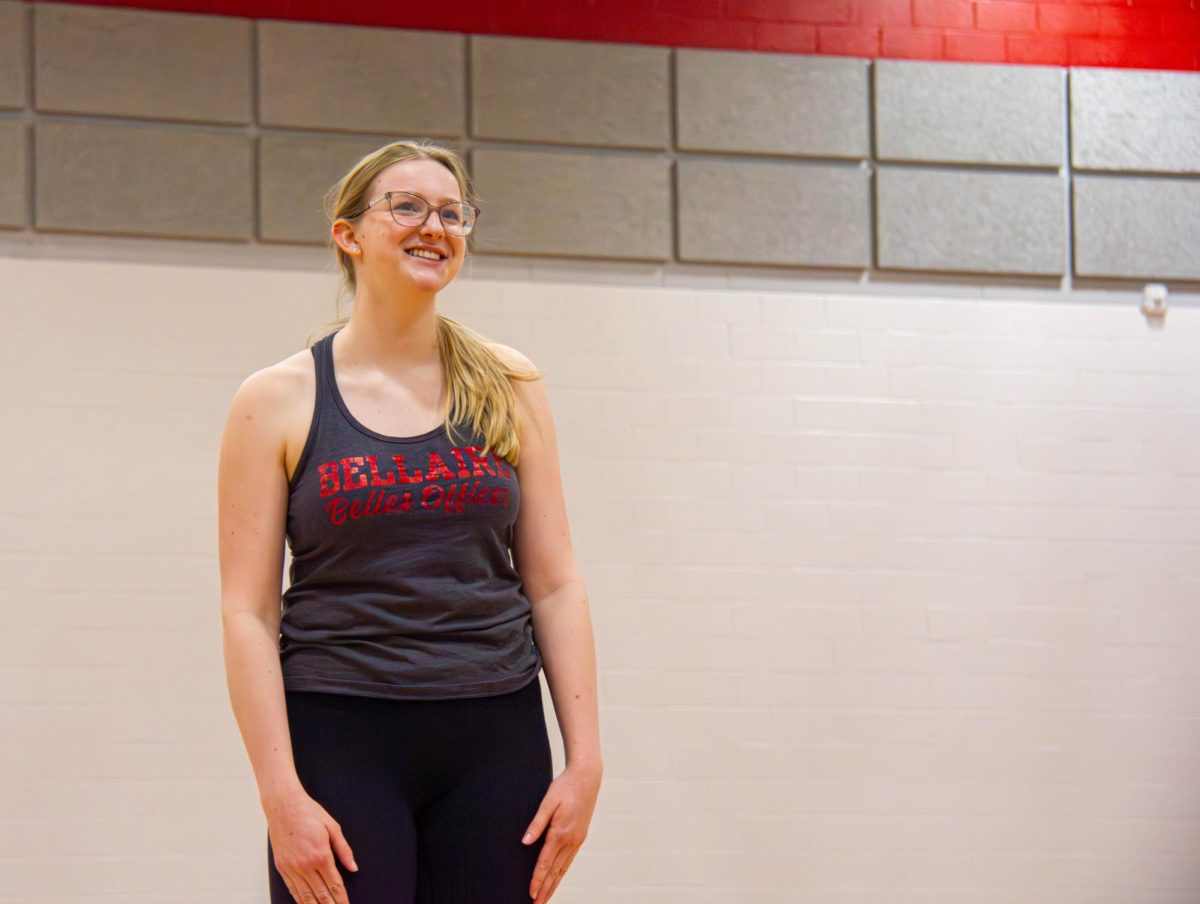
For individuals like senior Lillian Snell with dysgraphia, a neurological disability that impairs writing and transcription, writing is more than just moving a pen.
“Writing is really exhausting for me,” Snell said. “It takes me a lot of focus, and it’s just something that’s difficult to pay attention to. When I’ve been writing for a long time, I’ll find that I’ll start writing a word, and then [for] the last three letters, I’ll write a bunch of scribbles.”
Dysgraphia for Snell means that performing fine motor skill activities that involve coordination with hands, such as buttoning or working with zippers, is much more difficult. When it comes to writing on a daily basis, these challenges leave little room for perfect handwriting.
“When writing, [sometimes] I’ll write a word, and then I’ll go back to it and [realize] I’ve switched a bunch of the letters up,” Snell said. “I know how to spell, I’m a great speller, it’s just that what I’m thinking doesn’t translate to what I’m writing.”
Snell finds herself usually as the slowest note taker in class, especially in writing-heavy classes like AP Biology.
“I’m usually the last one on the slide,” Snell said. “I’m so busy focusing on taking the notes and trying to pay attention to my handwriting, I’m not even learning as I’m in class. So handwritten stuff tends to be a real source of struggle.”
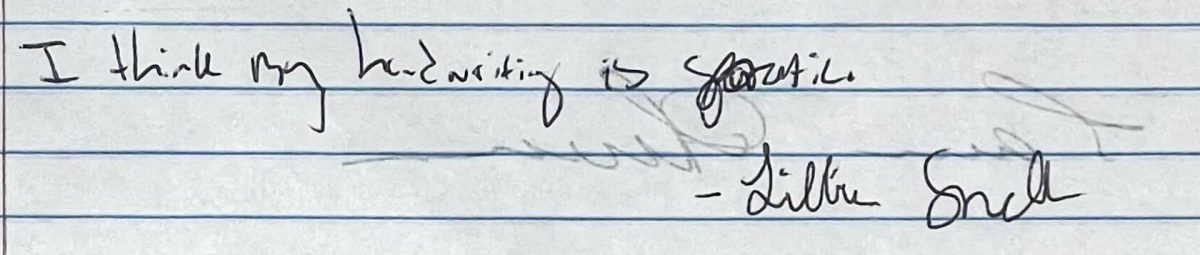
Ironically, Snell actually prefers writing over taking notes on a laptop because she is used to handwritten notes. However, even she sometimes cannot read her own handwriting when having to reference notes.
“I would probably say [my handwriting is] very rushed and kind of cramped together,” Snell said. “It’s also really difficult to follow because it doesn’t really have a pattern. Chicken scratch, at least if it’s well placed, you can kind of make out what it says. But all my words are different lengths apart, so you can’t even tell what’s supposed to be one word.”
Snell is part of the IB program, in which she has received complaints from IB coordinator and AP Human Geography teacher Ann Linsley about her handwriting.
“Especially being in the IB program, you just see so much variety,” Snell said. “These are all really smart kids, [so] I can’t imagine there being a strong correlation between handwriting and intelligence.”
Snell said she is not a very detail-oriented person, and it’s reflected in her handwriting.
“I think it does reflect how much someone cares about certain details,” Snell said. “For example, I mess up on a lot of things, and it doesn’t really bother me that much. But other people care about how their notes look. I think that’s a really good reflection of how they treat details in their life.”