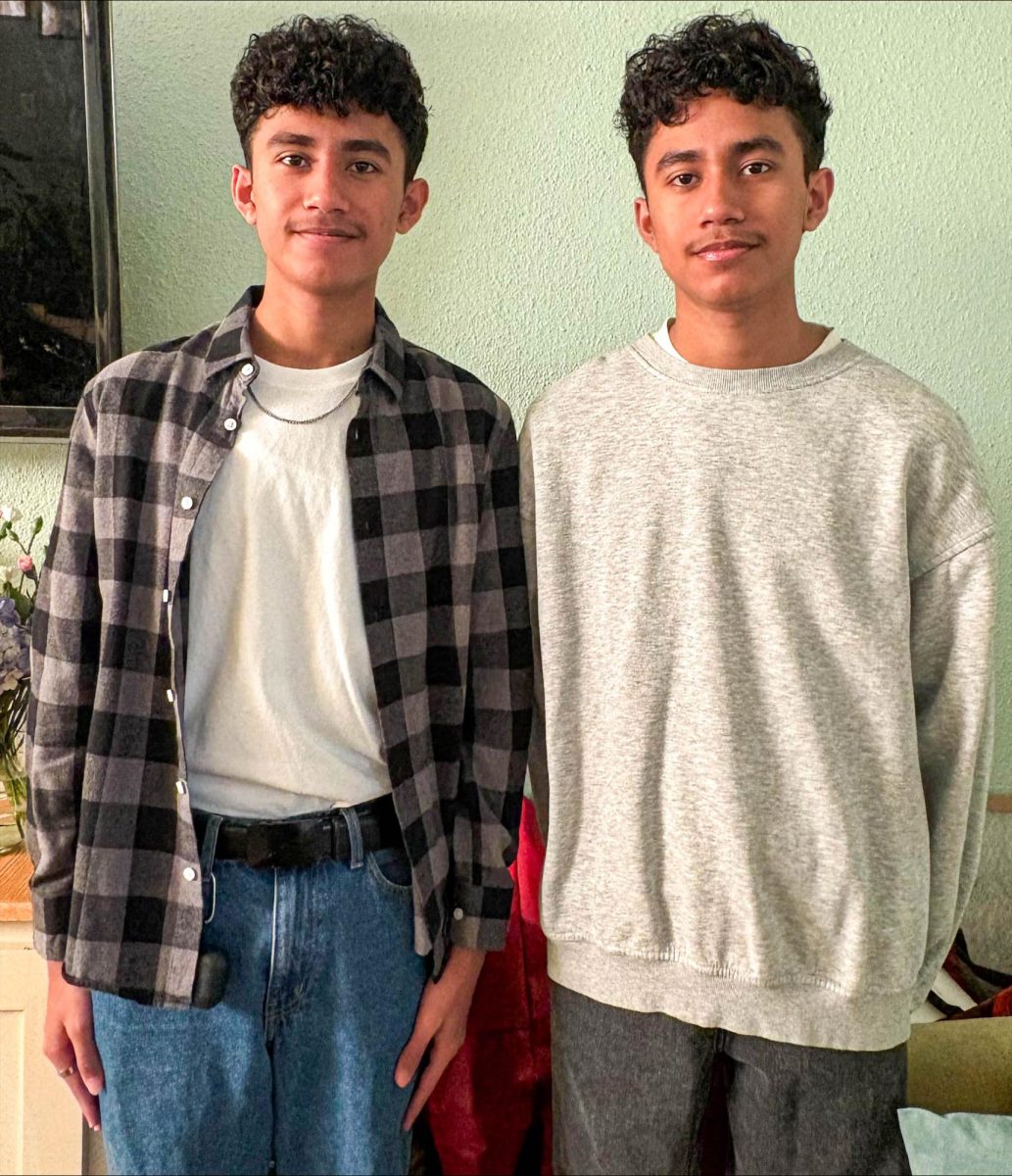
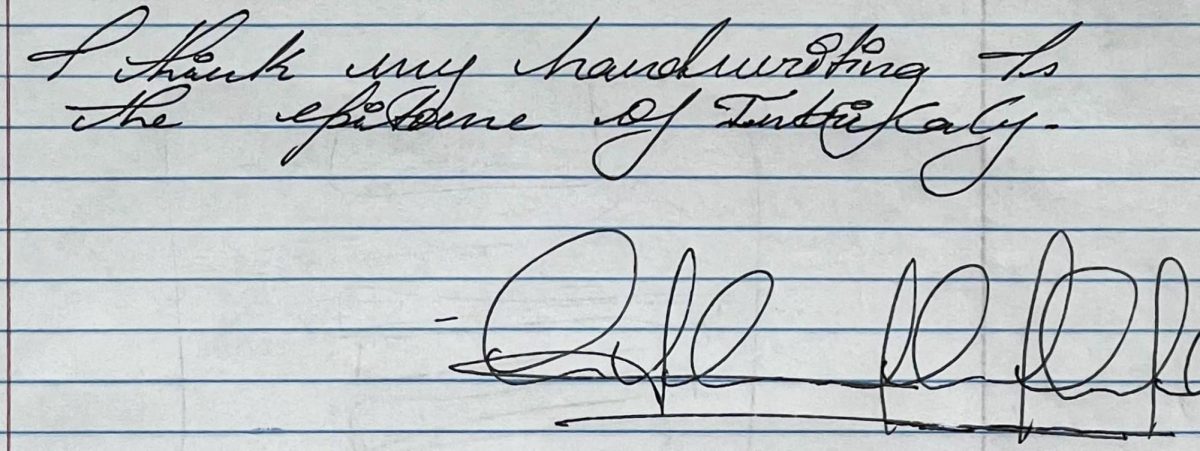
Knowing cursive is one thing, but having handwriting comparable to a Founding Father writing the Declaration of Independence is a feat of its own. So much so, there is a workbook for people out there wanting to “write like a Founding Father.” This book doesn’t even exist in freshman Udeep Matta’s world — instead he knows over 90 different types of cursive, which he started learning at 4 years old. As I was sitting down to interview him, he was showing me the different angles to hold a pen in order to get certain types of cursive.
“Depending on how you hold your pen, your handwriting changes,” Matta said. “Each type of handwriting in ancient literature is supposed to symbolize a certain type of image.”
Matta doesn’t write in print, as he believes cursive is “faster, more efficient and better in every aspect” because of the continuous flow of the pen without lifting the hand. Matta has an abundant selection of cursives to pick out for his day-to-day writing.
“I switch around often,” Matta said. “It depends on my mood. I write way more than average. If I have a calligraphical pen, I can write over 60 [double-spaced] pages within 30 minutes.”
Matta lived in India where he started calligraphy until 6 years old before moving to England, where he practiced calligraphy at the Jen Roffe Modern Lettering and Calligraphy Studio. Two years later, he moved to the U.S. and has been practicing calligraphy since then.
Matta believes that for the most part, handwriting correlates to how fast information can be processed.
“Depending how fast a person writes, it determines their speed of thought,” Matta said. “The faster a person’s speed of thought, the more intellectual capacity they have.”