


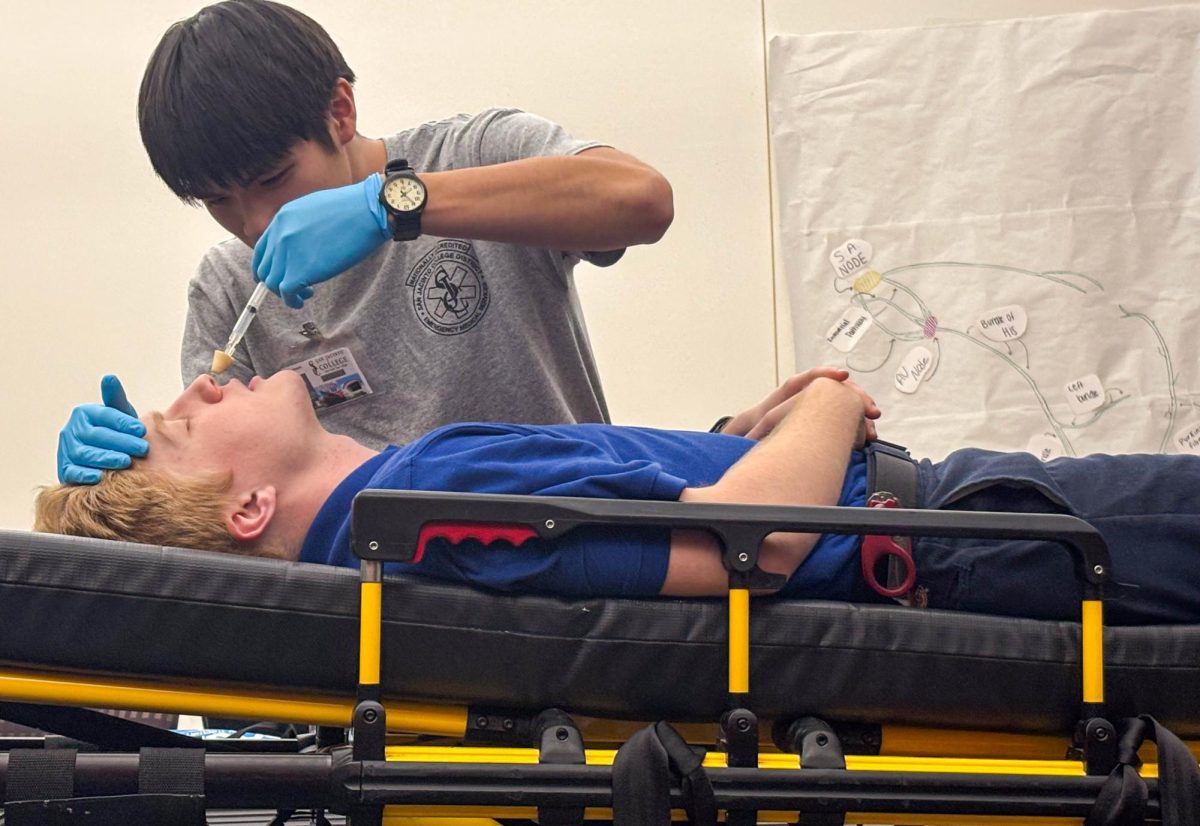
3:30 a.m. “Medic three respond. Major trauma.”
After a 20-minute drive, they found the accident under an overpass. Windshield shattered, air bags deployed, with firefighters already on the scene. The patient was unconscious.
“I was like, ‘Wait is this real now?’” senior Brayden Nguyen said. “She was unresponsive to everything: pain, verbal communication. She was dying because her organs weren’t getting enough oxygen.”
Nguyen only remembered three words as he transported his patient to the emergency room: “Am I dying?”
That was Nguyen’s first major trauma call as part of the Emergency Medical Services (EMS).
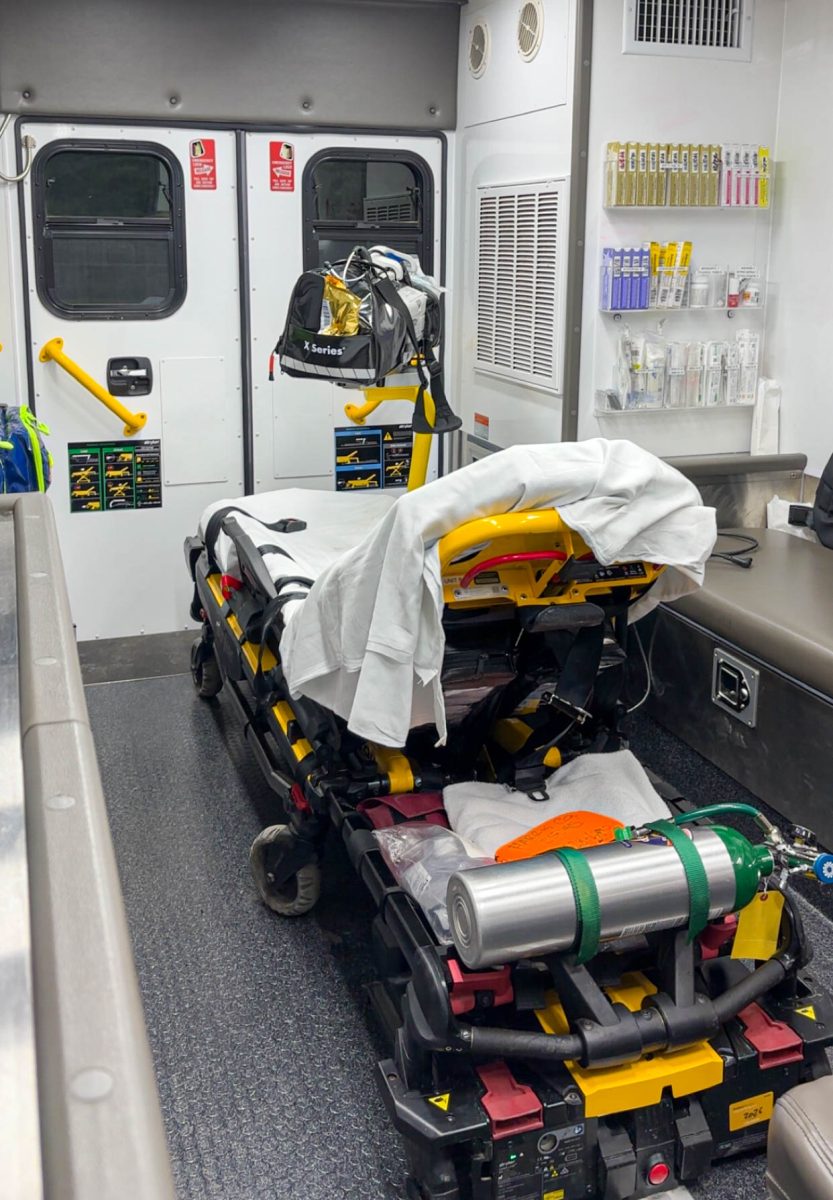
For Nguyen, his journey in medical service started off like any other student: hospital volunteering. Nguyen applied to volunteer at the Harris Health Ben Taub Hospital, a level 1 trauma center, starting in October 2025.
“Ben Taub is a teaching hospital, so it’s a really good opportunity to see things you wouldn’t normally be able to,” Nguyen said. “They let you into a lot of secure places like ICUs and there are so many more patients, so it allows volunteers to get a more realistic hospital experience. But since you are a volunteer, you aren’t allowed to have a lot of patient interactions except for feeding them. You can’t give any medical care.”
Looking to branch out his experience, Nguyen stumbled upon a more “interesting” option.
“I just wanted to go to the medical field in general,” Nguyen said. “In my sophomore year, I began looking for careers in the medical field. I saw EMS and immediately wanted to do that, but then I saw they got paid only $16 an hour and changed my mind. But when I saw it was so entry level that I could do it right away, I decided to try it.”
While a hospital experience offered more structure, it was not shadowing that Nguyen was passionate about.
“In the level one trauma center, everyone listens to the head physician,” Nguyen said. “They just come in and order everyone around. But in the field, you’re ordering yourself around. You do whatever treatments you think are necessary and take whatever decisions you can, as long as you can defend it. It’s a lot less strict. Even though it can be a lot less safe because the scene could change really quickly, I like it better. There’s more excitement and freedom.”
Beyond its autonomous nature, EMS allowed for Nguyen to give actual treatment to patients, something he would not be able to do in a hospital at his age and experience level.
“I like going on calls because it incentivizes me more,” Nguyen said. “I realized ‘Wow I can actually do a lot of stuff and help people on the ground.’ When I volunteered at the hospital, I was stuck watching patients because I was just a volunteer. It’s really cool to be in an environment where I can actually treat them. ”
Nguyen’s experiences as part of EMS come with a price. As the work typically demands 24-hour, and sometimes 48-hour, shifts, sleep is a rare luxury.
“The shifts are pretty tiring,” Nguyen said. “The most sleep I got from one of my 24-hour shifts was on the ambulance back from the hospital. When you are waiting for a call, you can sleep, but you don’t know how long you are going to be able to sleep for. The burnout can be pretty bad if you don’t pace yourself.”
Beyond the lack of sleep, Nguyen often deals with mistreatment from patients he gets called to help.
“EMS is one of the worst fields you can go into, because half the people don’t want you there and are screaming at you,” Nguyen said. “There was an instance where we got called to help a nurse, and some medical professionals can have a high ego because they think they know better than us. But they only know about how to help once in a hospital, not pre-hospital procedure. You get tired of dealing with people at some point because most people are so panicked that they just don’t care anymore.”
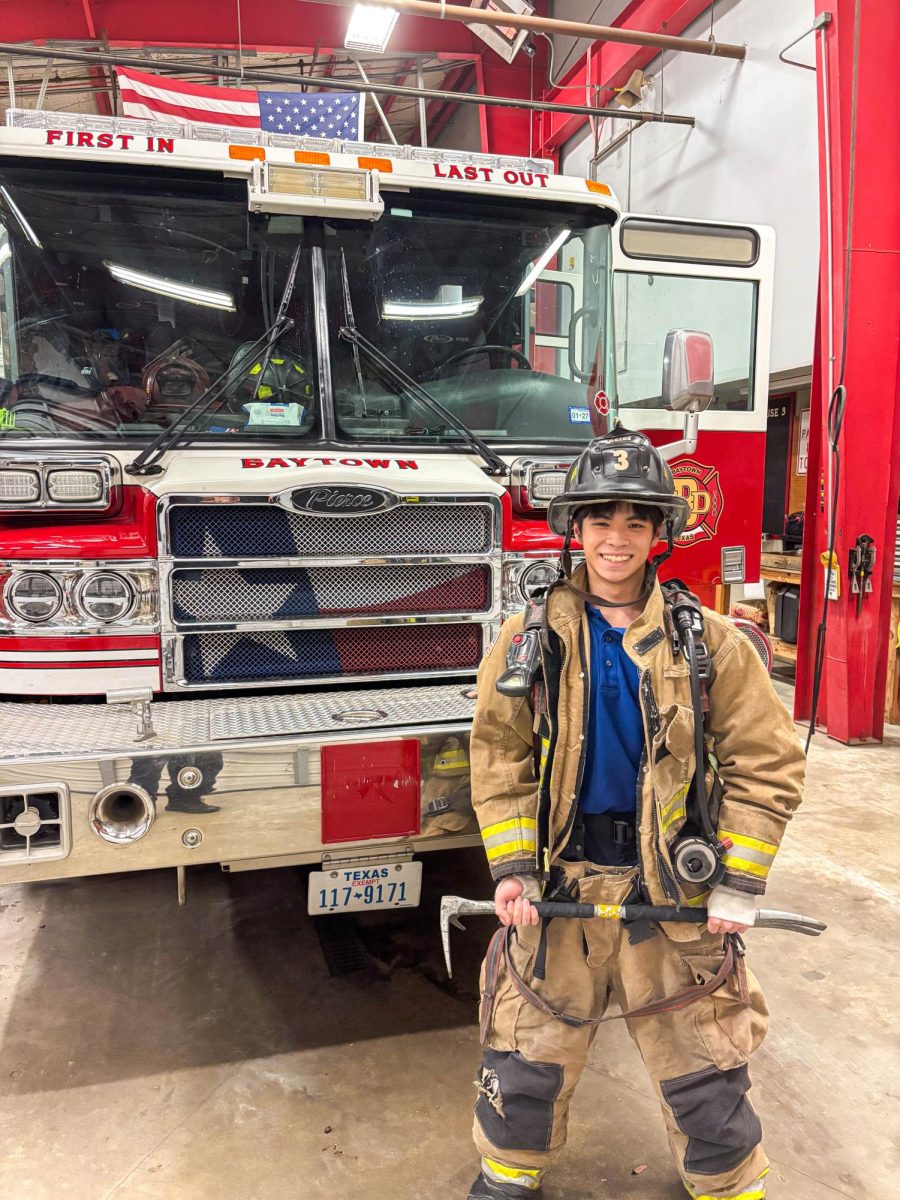
In addition to keeping himself composed when dealing with “uncooperative” patients, Nguyen had to learn to navigate the emotional component of challenging calls.
“When people on the scene are crying, I realize I never trained for that,” Nguyen said. “When you arrive, you have to be calm, because to us, it’s just another call. But when you’re calm, it can come off as you not caring. But it’s just hard to comfort people in these situations.”
It’s not just strangers that Nguyen dedicates time to care for, but friends as well. When senior Kasey Martin suffered a shoulder injury, Nguyen was there to help.
“He’s always there when someone is injured and is able to pinpoint the issues,” Martin said. “When I hurt my shoulder, Nguyen was an hour away. When I needed someone to take me, he drove an hour back to come pick me up and stabilize my shoulder, then came to work to wrap it because it was hurting. He’s one of those people who you can always count on.”
Through experience, Nguyen’s approach to service is dependent on stress management.
“When you routinely deal with that acute stress, it’s important not to overthink,” Nguyen said. “What’s done is done, and it’s pretty hard not knowing the final result once we drop them at the hospital. It’s normal to feel stressed and worried after a hard call, but you just have to deal with your stress the best you can. You get used to it after a while.”
Nguyen’s EMS work is part of his 150-hour requirement of clinical work for San Jacinto College’s Emergency Medical Technician course to become a certified basic Emergency Medical Technician (EMT). In addition to the clinical work, he is required to do 200 hours of lectures.
“You have to complete the course to be allowed to do EMS work,” Nguyen said. “EMTs can provide basic life support care like CPR, stopping bleeding, giving oxygen and giving certain medications like nitroglycerin and naloxone. However, we can’t do more invasive procedures like IVs, sedation or placing breathing tubes. It allows you to do patient care legally and sets your scope of practice.”
Fellow EMT student Liam Wargo attends classes with Nguyen at San Jacinto College every Tuesday, Wednesday, Thursday and select Saturdays. Through learning alongside Nguyen for over three months, Wargo saw firsthand both in and outside of the classroom how Nguyen “really understands medical problems and solutions.”
“He handles pressure really well and can handle any environment he is put in,” Wargo said. “You have to be willing to be put in high-pressure situations whenever they happen but also love the process when times aren’t as extreme. Nguyen does a great job at loving both.”
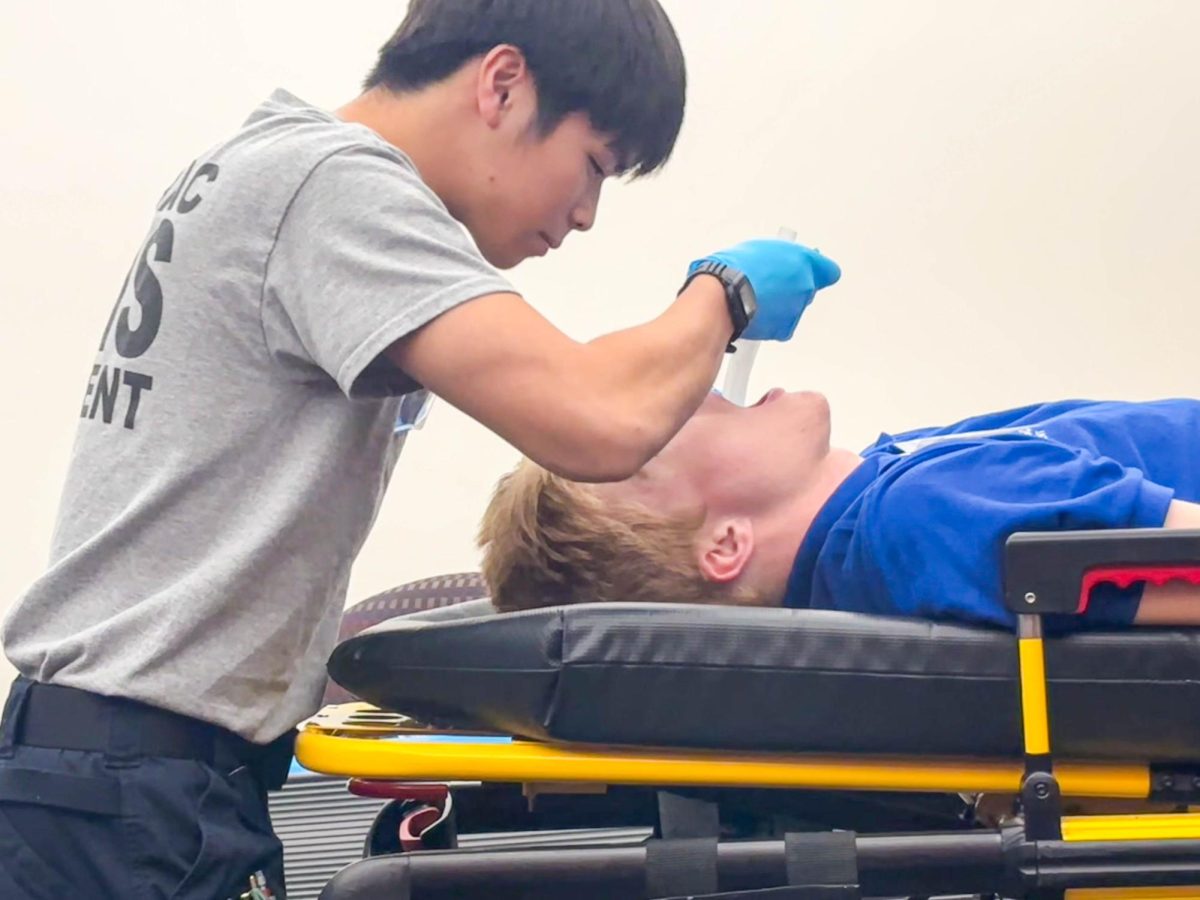
Being on the front lines, Nguyen has seen firsthand how healthcare operates as a business and who suffers the most because of that.
“We deal with a lot of low-income patients,” Nguyen said. “A lot of them will refuse an ambulance because of the cost, even if they need it, so we have to convince them to take it. We have to consider multiple factors including resource costs. On one of our calls, our helicopter life flight request for one of our major trauma patients was denied due to cost, so we were forced to drive her 40 minutes to a level one trauma center instead of a 20 minute flight.”
Though exposed to the “harsh realities” of healthcare, it is the people that keep Nguyen going.
“It’s really nice when you get kind patients,” Nguyen said. “The old grannies sometimes say ‘Oh, you’re such a handsome young man,’ which is sweet. Or when you do a cool procedure that works out and the surrounding family is all happy, that’s really rewarding.”








Ellie Zacharia • Apr 20, 2026 at 9:43 pm
This is such a good story Alia! Such an interesting feature, WOW Brayden!
Mason Zhang • Apr 20, 2026 at 8:04 pm
great feature!
Marielle Le • Apr 20, 2026 at 7:58 pm
amazing writing!
Clementine Behelfer • Apr 20, 2026 at 1:30 pm
Really loved this story!
Audrey Li • Apr 19, 2026 at 8:55 pm
great feature alia! such an interesting story
Zoe Gamboa • Apr 16, 2026 at 8:40 pm
What an impressive story 🙂
Dhara Senior High Agrawal • Apr 14, 2026 at 12:51 pm
I love this story Alia!
Mariam • Apr 9, 2026 at 7:20 pm
wow this is insane