


I keep my eyes glued to the screen, watching the buyers ahead of me dwindle as I wait in a lengthy queue of online buyers. We each wait patiently for our turn, waiting for that page where we can finally get what we want: Tame Impala tickets.
While it seems crazy to stare at a blank computer screen to buy tickets for your favorite artists’ concert, it’s not uncommon. As ticket sales increasingly become an online endeavor, the lines to buy them are getting bigger — and so are the prices.
Ticket sales started moving online as computerized ticketing systems began to be used by venues, allowing customers to purchase tickets over the phone while keeping a database of the seats.
But, once the internet rose, ticket sales moved online. Ticketmaster.com was launched in 1995, and merged in 2010 with LiveNation, allowing more coordination between ticketing and venues.
Today, ticket sales are completely online, with ticket boxes empty. However, moving ticket sales online has created new opportunities for scams.
People looking for an easy buck are employing ticket scalping bots — software that scans for newly available seats and purchases them by creating fake accounts, using speed impossibly faster than humans to purchase tickets.
When ticket scalpers buy up mass amounts of tickets, they can skyrocket in price. What was once a $50 ticket can easily go up to $500, making concerts and events unaffordable for the biggest fans.
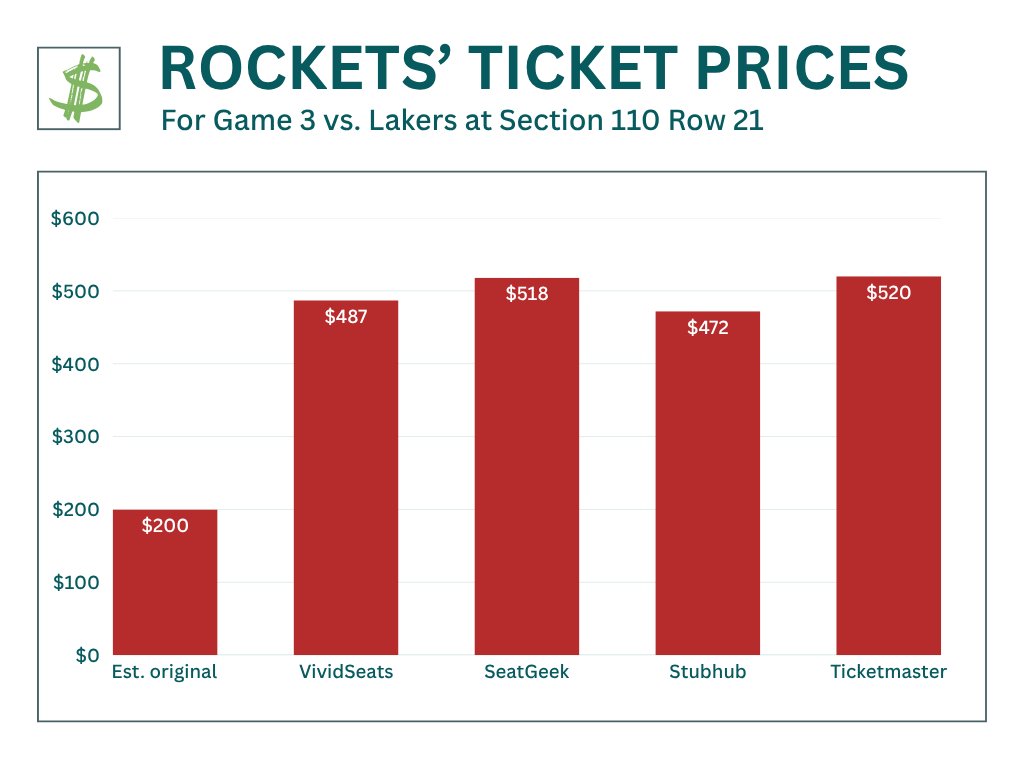
Take Game 3 of the Houston Rockets’ series vs. the Los Angeles Lakers: By looking at four second-hand sites, we can see that a ticket in the first level corner (Section 110) costs around $500.
(Ethan Reichek)
This is a significant increase from regular season games, where tickets cost less than $100 for the same seats. While playoff games normally cost more, these prices are not normal — scalpers know how much people want tickets to playoff games, so they use these bots to rack up tickets and profit from the prices.
The problem is, it makes sense for Ticketmaster to want scalping bots to buy tickets. Ticketmaster makes a lot of money off of fees first from the sale, taking a fixed percentage out of the profit the seller makes. They also make profit from the seller using their site in the first place, since they charge fees to the buyer too.
This relates back to the scalping bots because if they buy up all the tickets, then the prices will rise. When the prices rise, Ticketmaster makes more money by taking that percentage from the higher cost.
Unfortunately for the fans, because the secondary ticket market gets more money from the higher prices brought on by ticket scalping bots, Ticketmaster allows them to continue operating, making events unaffordable.
However, there is hope. In 2025, the Federal Trade Commission sued Ticketmaster for deceiving ticket buyers and using illegal resale tactics, one of the first instances legal channels have been employed to combat ticket scalping.
Government action is needed to fix this problem because big ticket companies want prices to increase. When ticket scalpers buy up tickets and prices skyrocket for events, it means that the ticket companies can charge more money in fees, raising their revenue. In fact, Ticketmaster made $16.4 billion off of ticket fees alone in 2019-2024, with fees accounting for an estimated 30% of a ticket’s estimated cost in 2024.
More accountability needs to be held against all parties involved to fix this problem, and there are many pieces of the puzzle that need to work together.
First, venues must step up their game, placing measures to keep ticket prices low. For example, venues could prevent the resale of tickets on third party sites, or have a price cap.
Additionally, the FTC should engage with more ticket companies, taking down giants who are keeping ticket scalpers in business.
They recently made progress, suing LiveNation (Ticketmaster’s parent company) for having a monopoly on tickets, a step in the right direction to end the problem of ticket scalping.
The ticket market is a difficult place, but with efforts like this to detect bots and keep reasonable prices for attendees, I still have hope that the ticket industry can become more accessible for the biggest fans, but for that to happen, everyone in the system needs to be held accountable.






Bethel Kifle • Apr 28, 2026 at 3:42 pm
Great job Ethan! Scalping is such a huge issue, glad it’s getting the coverage it deserves.
Palmer McNulty • Apr 28, 2026 at 8:12 am
Great story Ethan!!
Alav • Apr 28, 2026 at 8:10 am
Thank you for mentioning the world cup and Ariana Grande this is a great story
Alia • Apr 27, 2026 at 4:43 pm
Amazing story Ethan! Love the game too!
Joey • Apr 27, 2026 at 3:26 pm
Wow Ethan! This is so cool.