


Between Oct. 1 and Nov. 12, 2025, millions of low-income families whose food stamps were suspended turned to finding other support systems in the U.S. Over a million federal employees were placed on temporary unpaid leave, with some continuing to work without pay. Thousands of domestic flights were cancelled and thousands more were delayed, interrupting passengers’ travels.
Lasting for a total of 43 days, this government shutdown was triggered by partisan clashes over federal funding. The funding lapse began when Congress failed to pass the 2026 budget and halted subsidies to federal programs and services.
Over a month later, President Donald Trump signed a short-term continuing resolution and funding bill into law, which funded much of the government until the end of January and ended the shutdown.
Following this were two partial government shutdowns, both arising from disputes about reforms to federal immigration enforcement. The first shutdown lasted four days from Jan. 31 to Feb. 3, and the second shutdown began on Feb. 14. While most federal programs, including the Supplemental Nutrition Assistance Program (SNAP), are funded through the end of September and remain unaffected, agencies within the Department of Homeland Security are facing funding challenges.
The Impact
As America’s largest anti-hunger program, SNAP serves over 42 million people. Harris County, encompassing the greater Houston area and additional cities including Bellaire, contains more SNAP recipients and eligible individuals than any other county in Texas. In the entire state, 3.5 million people — including 1.7 million children — rely on SNAP each month.
Due to the delay in federal funds caused by the government shutdown, SNAP recipients only received partial payments at the beginning of November of 2025. After two weeks, funding and full benefits for all Texan families resumed. However, the future of SNAP enrollment remains uncertain.
The One Big Beautiful Bill Act (OBBBA), signed into law by Trump on July 4, decreased spending in several social safety net programs. The legislation reduced funding to food programs by $1 trillion, including $187 billion in cuts to SNAP, while implementing over $4.5 trillion in tax cuts to the wealthy.
As outlined by the OBBBA, states are required to pay for a portion of SNAP benefits starting in 2027. These compensations are based on their individual payment error rates, a measure of the underpayments and overpayments made to SNAP participants. When states don’t have enough revenue to account for these large federal cuts, they will resort to cutting benefits and restricting the number of recipients. Many states, including Texas, have already imposed Employment and Training (E&T) rules that suggest households are at immediate risk of losing benefits.
More enrollees are required to work, volunteer or participate in job training for at least 80 hours a month — otherwise, they will only receive benefits for three months every three years. Exemptions to these work requirements were removed from homeless individuals, veterans and young adults aging out of foster care. Eligibility will be limited to those who have resided in the U.S. for at least five years, eliminating benefits for refugees and asylum seekers, 21% of which relied on benefits between 2005 and 2019. Under these provisions, 4 million SNAP recipients would lose some amount of their benefits monthly.
In Texas, work requirements and eligibility changes were implemented on Nov. 1, 2025. Additionally, expanded work requirements were in effect beginning on Feb 1.
The Response
As the school’s social worker, one of Stephanie Aguilar’s many responsibilities is to serve students’ basic needs. This includes providing low-income students with clothing, food or other necessities. Following the 2025 government shutdown and frozen SNAP funds, local organizations like Faith Bellaire Church and Bellaire PTO took initiative and contacted Aguilar.
“We’re really lucky with our community support here in Bellaire, specifically Faith Bellaire Church,” Aguilar said. “They were the first community resource that reached out to me immediately.”
Aguilar said she devotes her job to removing barriers from education. She believes that ensuring students’ physiological needs are met allows them to focus their full attention on learning in the classroom.
“I actually just got an email from a mother,” Aguilar said. “She said that she was embarrassed to ask for help for a long time, especially at school, because people here know her son and she didn’t want them to look at him differently.”
Because of this, it’s not always easy for Aguilar to directly contact and accommodate families in need. Due to the “stigma” attached to those who rely on food assistance, it’s often challenging for families to reach out for help during such crises.
“These families aren’t what everybody thinks,” Aguilar said. “They’re hard working. They’re trying to make it. With the way the economy is right now, anybody could really end up in that situation. There’s just so many different situations, and a lot of people are closer to needing that assistance than they even realize.”
Save the Children (STC) Club, associated with the global nonprofit of the same name, shares a similar mission as Faith Lutheran Church. Sophomore and STC Club Event Coordinator Maryam Elkady said members of the nationwide network are advocates who stand up for children’s rights and help drive policy changes that put those policies into place.
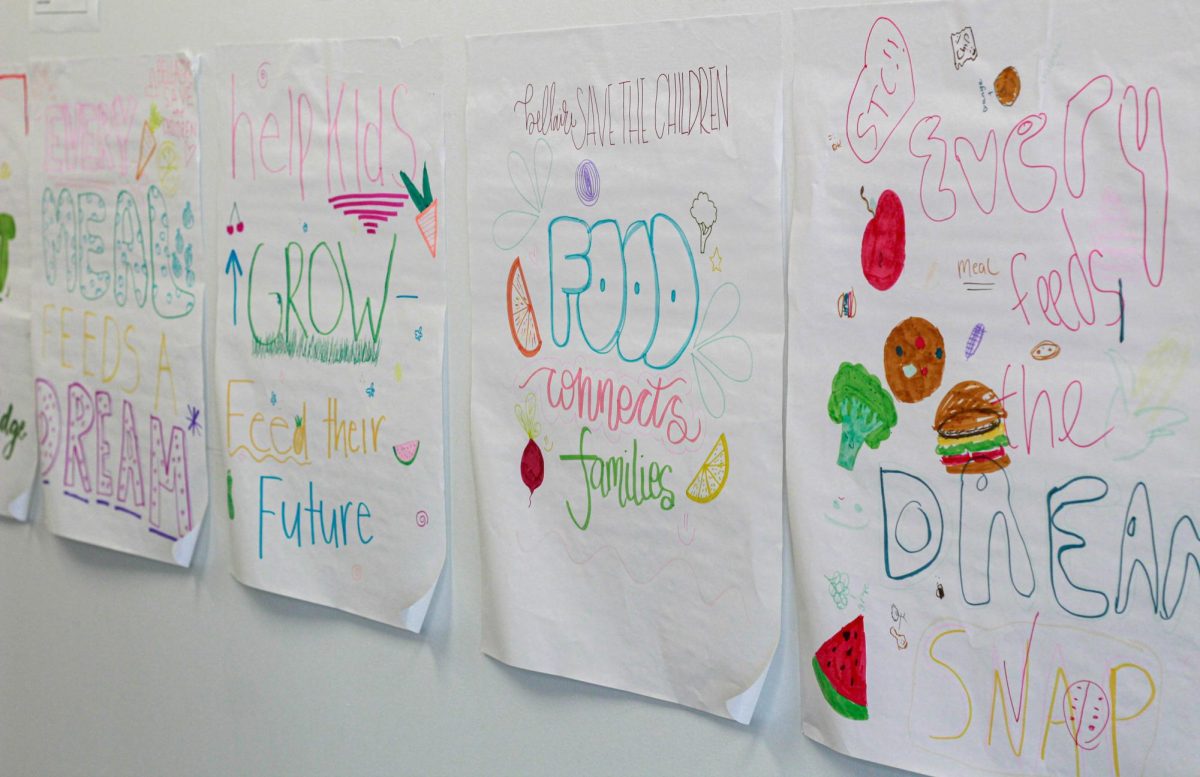
STC Club hosted a meeting dedicated to creating SNAP advocacy posters on Nov. 13 in Room 2709. These posters emphasized the impact of food assistance to children and brought awareness to families affected by the temporary loss of SNAP funding.
“We wanted people to notice the loss of SNAP funding in a way that felt a little more fun and engaging, even though it’s not a fun topic at all,” Elkady said. “We used bright, colorful photos and passed out snacks to help draw attention and raise awareness. We wanted to bring the issue into the light and encourage advocacy.”
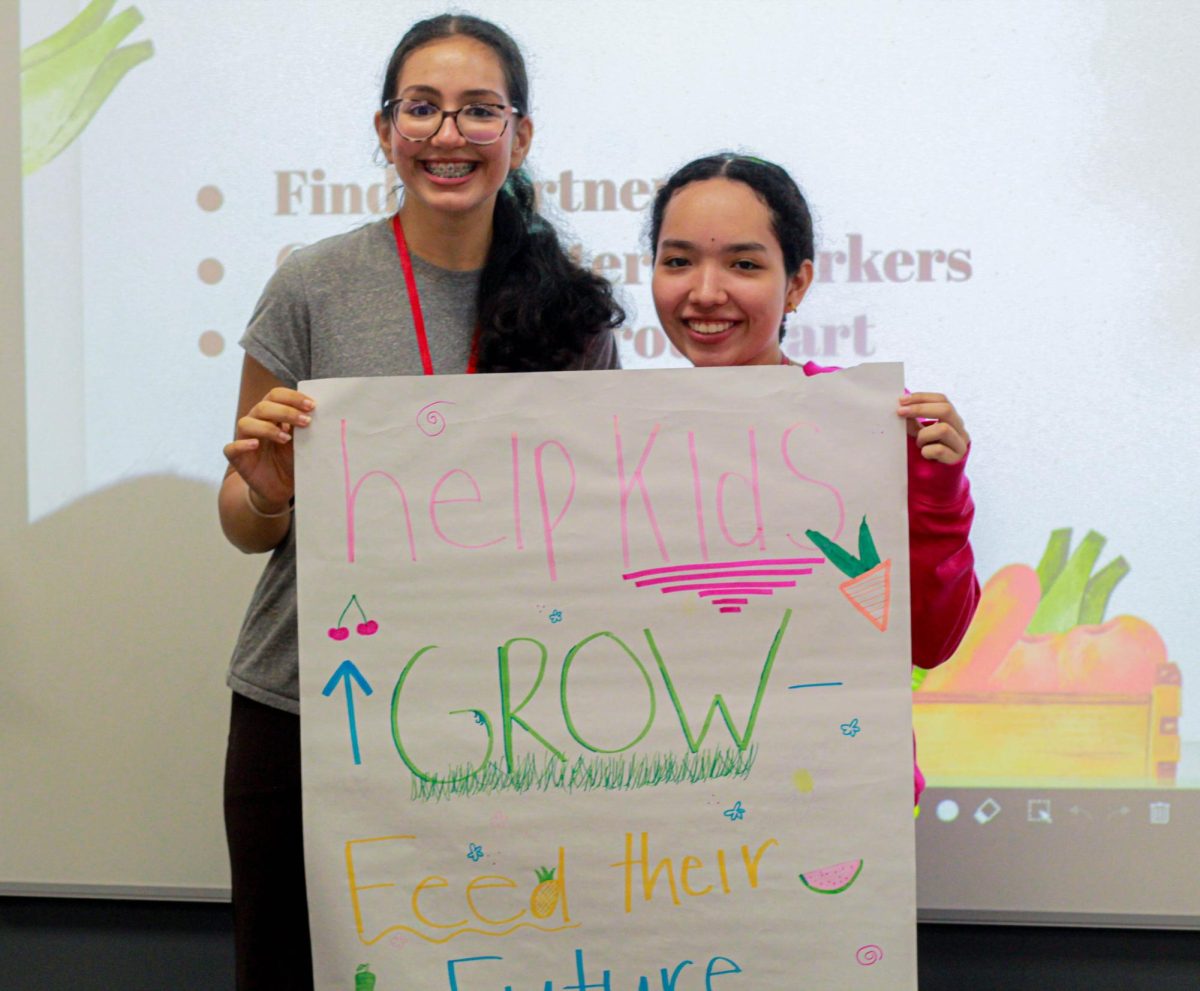
According to Elkady, the club’s focus on helping children during times of heightened food insecurity stems from understanding the proper nutrition intake for shaping children’s health and development.
“People need the most care when they are younger,” Elkady said. “When children don’t have food on the table and they’re given limited rations, their bodies aren’t developing normally.”
Also known as malnutrition, this condition can severely stunt child development. Early malnutrition endangers children to a range of health and mental consequences, from irreparable physical damage to impaired cognitive abilities. Unfortunately, most children who endure these conditions suffer from them well past their adolescence. Their adulthoods are at higher risk of metabolic disorders and chronic diseases, diminishing their overall health.
Under these same circumstances, teenagers like an anonymous student at Bellaire are as susceptible to these health conditions as children. Despite the student’s family relying on SNAP benefits heavily, their benefits were not renewed in the fall of 2024 because they were reported to have met the maximum monthly net income of approximately $3,000 for a family of five.
“My mom’s a single mother,” the student said. “What’s harder is that I live in a one-bedroom apartment with three siblings and my mother, so it’s five in an apartment. I work 60 hours every two weeks at a nearby restaurant and get paid $11 an hour. Every day after school I head straight to work, only to be overworked and underpaid.”
Due to their living conditions, the student’s family re-applied for SNAP benefits. However, for the same reason they lost their benefits, the family was denied food assistance.
“I’m the oldest of my siblings,” the student said. “It’s just my mom and I who work. Without government help or anything to depend on, it’s stressful. I have to think, ‘I need to help my mom with this. I need to help my mom with that. I need to buy groceries to help with my siblings. Let me ask my siblings if they need something. I need to make a plan and make a budget on how much I can spend so I have enough money to save for my future careers.’”
Long work hours, helping around the apartment and the inability to afford nutritious food consume a significant amount of the student’s time and energy, leaving only “tiny increments” to prioritize their education.
“Taking away our SNAP benefits has taken away 60% of my focus in school,” the student said. “I’m a bit behind in my classes as well because I have to work to provide for my family. Right now, we don’t even have enough food. I remember having one banana, a few apples and some soup packets in our house. I don’t recall having any protein.”
While reaching out to others like the school’s social worker for support can make a significant difference, some people still find it difficult.
“I’m too shy to ask my friends for help, but sometimes I ask them if they have a little bit of money so I can buy myself food,” the student said. “I do pay them back eventually. I don’t really ask my mom for much either because she’s tight on money. People who have never relied on SNAP should appreciate that they have good income. But they’re sometimes rude to others who have low income, and I know people get bullied because of it.”
In addition to earning enough money to afford nutritious food, the student’s family must also consider paying other expenses. Still, with their current financial situation, that has been a “never-ending struggle.”
“My mom also has to pay the light bills and buy stuff for my siblings,” the student said. “I can provide for myself now, but I need to contribute partially to my mom’s paycheck so I can help her with paying for the rent and the internet as well. I really hope the government knows that living off $11 an hour and having my mom work four jobs and do side hustles is not enough for a five-member family.”
Denied federal food assistance, yet struggling to make ends meet, the student feels the government “cares less” about families like theirs. The student finds it is “hard receiving no money from the government,” living paycheck to paycheck in a small living space and relying on insufficient meals.
“The government needs to protect people with low income,” the student said. “They need to understand that some of us can’t even provide for ourselves, even though we have families to take care of. I just wish they would change that, because it’s highly unfair for us.”
To relieve the impact of insufficient funding for food assistance programs, community organizations like Faith Bellaire Church and Houston Food Bank have stepped up. Through local initiatives like special food distributions during SNAP disruptions, they have been able to provide a stable supply of food for working families in need and protect their health and well-being.
“Every now and then, there’s a building near my apartment that gives out food to people who don’t have enough food,” the student said. “My family and I had to go there, and the experience was hard for me because it showed how much my family was struggling with money. Personally, having to go to the food drive made me feel embarrassed and uncomfortable, but it also made me realize that sometimes we struggle and it’s also part of life.”
The student said that the food drive supported their family during times of financial hardship, relieving their mother’s worry about putting food on the table.
“What gives me hope is knowing that there are people in the community who care and want to help others,” the student said. “Programs like this show that families aren’t alone, and I hope more low-income families can get help like this in the future.”


















Skylar Lew • Apr 23, 2026 at 7:38 pm
Omg I love all the features in this story. We should definitely incorporate the quote boxes into more stories. Well done!
Ishani • Apr 21, 2026 at 7:55 pm
WOW Angelina. Such a melancholic yet hopeful take on this prevalent issue. great read!
Dhara Senior High Agrawal • Apr 14, 2026 at 12:51 pm
I love how informative this is!
Catherine Xue • Apr 13, 2026 at 1:42 pm
Love this story!
Elly Zhang • Apr 1, 2026 at 10:13 pm
SUCH an incredible, in-depth news story!
Marielle Le • Mar 31, 2026 at 7:55 am
this story is amazing! I love the multimedia
Alav • Mar 30, 2026 at 3:47 pm
thank you Angelina for covering this! Written beautifully
coral • Mar 30, 2026 at 2:44 pm
this is so good omg
Simran • Mar 30, 2026 at 12:13 pm
i love this article very insightful
Emilyn • Mar 30, 2026 at 10:14 am
so insightful and I can really see the hard work!! amazing story