


Empty eyes fixate on the asymmetrical jaw angle in the mirror. “People can’t see me like this.”
He prepares his fix of crystal methamphetamine, peptide injections, 280 milligrams of testosterone, cerebrolysin and retatrutide for the day.
With a steady hand, he slowly releases the air bubbles and liquid subsequently dribbles out the tip of the syringe. From the first puncture, it fills him with artificial confidence. Now, he’s ready to face the day.
Hundreds of thousands of adults, teens and children follow Tiktok Creator Clavicular on his nightmarish daily routine.
This new influencer openly refers to himself as “the Looksmaxxer” after reigniting the looksmaxxing movement, and for him, this routine is nothing unusual.
He embodies everything wrong with the emerging looksmaxxing trend. Clavicular was named after his fixation on bone structure, specifically the clavicle, which he claims is the single bone that determines male attractiveness. He has amassed over 600,000 followers on TikTok alone, with his content reaching further through mass media attention.
We should be deeply disturbed that crystal meth—a drug known to rewire the brain’s prefrontal cortex and cause irreversible damage is being advertised as casually as a vitamin supplement. His justification of using crystal meth is that he claims it helps him “leanmaxx” and hollow out his cheeks. This is sadly not satire nor an exaggeration. It is a dangerous reality and what is even more alarming is the fact that he has such a large community that supports and normalizes his actions.
What began as casual beauty advice has now snowballed into a culture of obsession—one that destroys confidence and promotes physical harm. Looksmaxxing is no longer self-improvement—it's self-destruction. This growing fixation will not only erode young people’s self-worth, but also produce a generation that values bone structure over character, empathy and individuality.
Behind this internet subculture lies a familiar pattern—insecurity disguised as discipline. The facade quickly dissolves when I come across Clavicular’s videos. What I see is not confidence, but desperation of a deeply insecure man clinging to an illusion of control over his worth.
Clavicular is not an outlier. He is one of many creators producing content targeted at teenagers who are already vulnerable and unsure of themselves. These influencers promote unsafe, unrealistic beauty standards while glamorizing dehumanizing and degrading practices.
The message is clear and relentless—your physical features determine your value. Teenagers and even young children are absorbing this ideology, internalizing the idea that appearance is the most important quality. This damages how young people see themselves and others, reinforcing a shallow, transactional view of human worth.
Self-improvement content has existed since the early days of social media. Shortly after YouTube’s creation in 2005, videos promising “LOOK HOT in five minutes or less” began circulating. What was once loosely categorized as “self-care” has since mutated into something far more malignant.
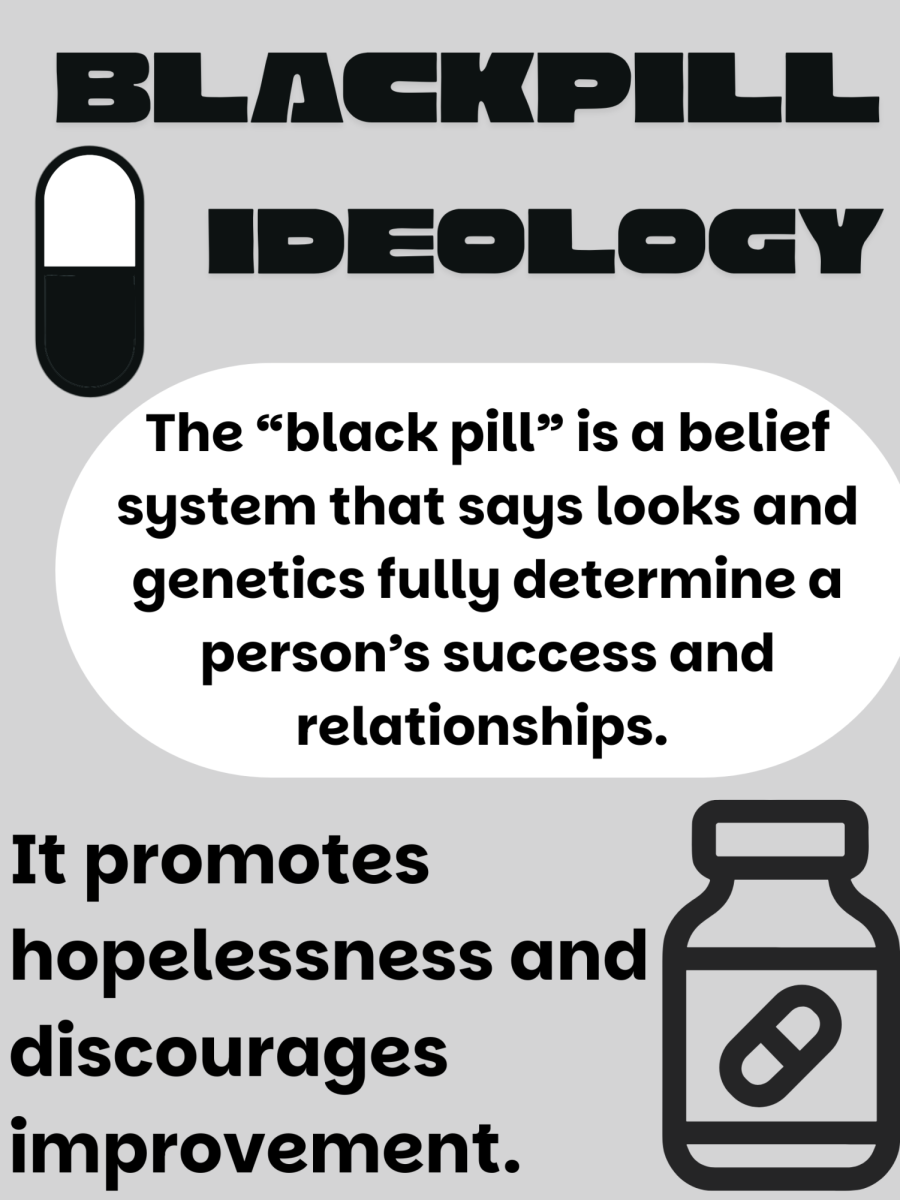
The term “looksmaxxing” originated on an incel forum, Lookism.net, before spreading to Reddit’s “black pill” communities and eventually reaching mainstream platforms like TikTok.
Content centered on “ascending”, or becoming more attractive, has reached disturbing extremes, fueled by vanity and narcissism in their most destructive forms where these creators overwhelmingly target young male teens and adolescents. Simultaneously, they are promoting toxic masculinity and the false promise of quick, superficial solutions to deeply rooted insecurities.
Young men have made up the majority of participants in black pill ideology and “alpha” mindsets, and looksmaxxing is simply the latest iteration.
Like many students, I enjoy a short doomscrolling intermission after finishing homework. But I urge anyone who encounters looksmaxxing content to disengage. Every view, like and comment amplifies these creators and extends their reach.
Beyond the immediate physical dangers, the psychological consequences are even more severe. Adolescence is a critical period for identity formation, and constant exposure to content that equates appearance with value distorts how young people understand themselves and others. It is fueling an endless culture of comparison, where individuality is forgotten in favor of rigid, unattainable ideals.
Unchecked algorithms on platforms like TikTok and Instagram intensify this harm, trapping vulnerable users in cycles of insecurity and self-criticism.
Looksmaxxing is unnecessary and profoundly unhealthy. While it masquerades as self-improvement, it ultimately corrodes confidence and leaves individuals more insecure than before.
While some may find these videos absurd or entertaining, younger audiences lack the cognitive maturity to distinguish satire from reality.
Instead of fixating on superficial traits that offer no lasting fulfillment, we should invest in what actually builds confidence—creativity, connection, empathy and self-acceptance.
Instead of looksmaxxing, try “lifemaxxing”, and love yourself and others for more than what can be measured in bone and angles.
To learn more, visit this website.








Mallika Mohan • Feb 16, 2026 at 4:35 pm
a really relevant and important story!