
“Wil Lutz from the Bills’ 23-yard line.”
“The field goal is kicked, and it is… good, and the Broncos will advance to the AFC Championship.”
Can one kick cost a man his job of nine years?
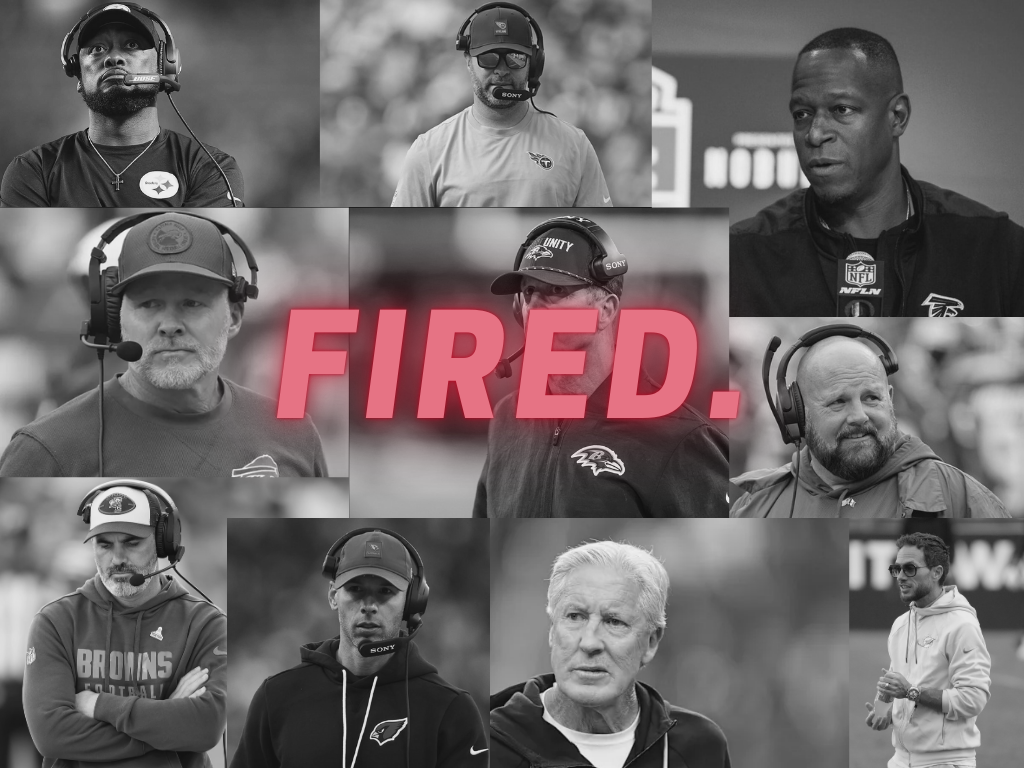
Following the Buffalo Bills’ firing of Sean McDermott after their crushing overtime loss to the Broncos in the AFC divisional round, the National Football League (NFL) will end this season having 10 head coach position openings.
That’s nearly 33% of the league.
The openings this year tell two stories: one of “fresh meat” coaches like Carroll, Callahan and Morris not “matching” with their teams and potential rushed expectations, and another of longstanding legacies like the Ravens, Bills and Steelers (granted, on Tomlin’s own accord) taking the first steps toward a “rebuild.”
Don’t get me wrong, if you are quantifiably bad at your job you should be fired — that’s a rule of thumb not just for the NFL, but for work as a whole. However, in a field as turbulent as the NFL, we need to realize there is a fine line between being a bad coach and having a bad year.
The prime example of this has to be Pete Carroll’s tenure with the Las Vegas Raiders. If you exclude this past year in Vegas, Carroll has an all-time record of 170-120-1 in the NFL for a near .600 win rate, one Super Bowl ring with the Seahawks’ 2013 “Legion of Boom” and back-to-back national championships with the University of Southern California.
I don’t know about you, but to me, a coach with that much on his resume is not bad.
There are a multitude of reasons why Carroll may have not done well in his first season with Las Vegas, such as Geno Smith’s horrendous quarterback performance, but the key point here is that it was Carroll’s first season in Las Vegas. When you have a coach with a $45 million, three-year long contract that you will most likely have to pay out as a result of firing him, I don’t care if he goes 0-17, it is irresponsible to waste team finances like that based off of a first season (even if you have the second-largest cap space in the league).
While Liam Cohen and Mike Vrabel’s phenomenal first-year performances with the Jacksonville Jaguars and New England Patriots respectively show what a first-year coach can do for a franchise, they have very clearly been the exception and not the rule this season. The difference between a team like them and a team like the Raiders is that those teams have key, blue-chip players, like Drake Maye and Trevor Lawrence, that almost any coach could make some motion with. In the 2025 season, the Raiders simply did not.
This is not me saying that a head coach should never be fired (a fair amount of the firings this season have been largely justified). However, as fans of the NFL, we have to acknowledge there is something concerning about the rapid rate coaches have been fired and hired this year.
While many teams can use the “one mistake is all it takes” mentality to create the pressure necessary for coaches and players to succeed, it poses a serious issue for the league when applied at a large scale. When the NFL enters a loop where a coach is let go from one team and then within the month brought onto another, what does it really say about the integrity of these firings and overall team culture in the league?
This exact sequence of events can be seen in the 5-12 Cleveland Browns firing their sixth-year coach Kevin Stefanski. On Jan. 5, he was out of a job, and just 11 days later, on Jan. 16, he was hired as head coach for the Atlanta Falcons. While you could flip my previous argument on me and say that Stefanski simply didn’t fit the Browns organization, I would agree with you because no head coach over the past quarter-century seems to have fit their organization.
Ignoring how terrible the Browns are as an organization overall, the point that I’m making is that firing a coach like Stefanski, who had a 45-56 record from 2020 to 2025, is an example of how NFL teams should fire head coaches. You give them time and a little bit of benefit of the doubt to develop and grow, and see the results — if you don’t work with an organization, you shouldn’t be with them, but one or two years time is not enough to assess that.
As the postseason comes to a close, the offseason begins, and teams really start to restructure around their new coaches, keeping an eye out for poor first-year performances. Because when, not if, some of these new hires get fired come next January, I guarantee you most of them will be back in a job within the month.
And the cycle will continue.
Hire. Fire. Hire. Fire.








![[SPORTS TV] Kaitlin Kiew](https://threepennypress.org/wp-content/uploads/2026/05/THUMBNAIL-USE-1200x800.jpg)

![[SPORTS TV] Joshua Mathiesen](https://threepennypress.org/wp-content/uploads/2026/04/THUMBNAIL-1-1200x800.jpg)
![[SPORTS TV] Alexander Tilney and Andres Lucio](https://threepennypress.org/wp-content/uploads/2026/04/THUMBNAIL-1200x800.jpg)