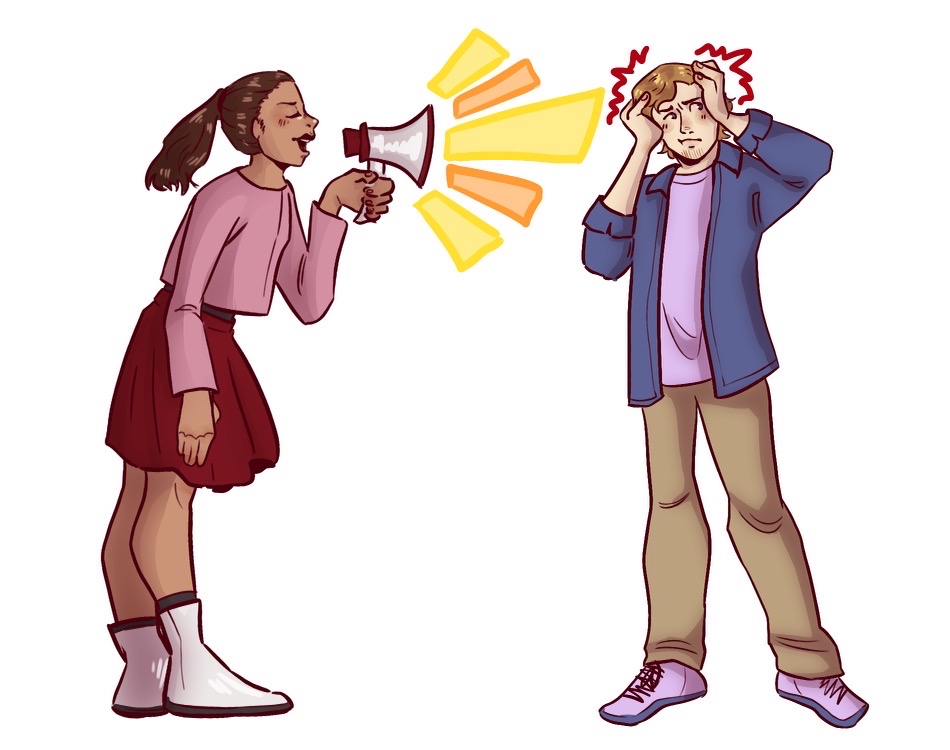

It takes three seconds for a driver to react.
An inattentive driver can cause death in three seconds.
You may think it won’t happen to you. But the truth is that the risk for vehicle crashes is higher among teens ages 16-19 than among any other age group, and motor vehicle crashes are the leading cause of death for U.S. teens according to the Centers for Disease Control and Prevention.
For many teen drivers, their time behind the wheel is spent distracted—looking at their phone, checking their appearance in the mirror or even changing the music. What feels harmless can be deadly. Let’s say texting while driving takes your eyes off the road for five seconds, and if you’re driving 55 miles per hour, that’s like driving the length of a football field with your eyes closed. In that short time, nothing can stop a crash from happening.
I hear from my friends that they’re able to “quickly glance for a second,” or that once they hear the ping from a notification on their phone, they can “multitask” while driving. Sure, the buzz of hearing something on a phone is tempting at the moment for some people, but that’s exactly what the problem is. A moment of giving in and checking is all it takes for a crash to occur.
It’s not just texting and driving, though.
Any distraction can increase the risk of fatalities or injuries while driving. Adjusting your seat, putting your Airpods in, looking up something on your phone and it should be a no-brainer that every moment counts. Teenagers are still learning the ropes behind the wheel, with barely a few years of experience.
Nearly 48 states ban the use of texting and driving for all drivers, and most states restrict what teenagers are allowed to do behind the wheel, but that’s not enough. Despite these laws in place, many still ignore them and continue risky behaviors on the road, which shows that even legislation isn’t enough to change the way people drive. Unlike speeding or running a red light, texting behind the wheel makes it harder for officers to observe and effectively enforce violations. Because of that, the effectiveness of those laws relies heavily on drivers complying, as well as on public awareness.
It’s campaigns like “Teen Click It or Ticket It” that show safer habits for driving. These programs collaborate with law enforcement and the media to create visible change in the community—something that bans don’t do.
In Texas, the last deathless day for driving on roadways was on Nov. 7, 2000. That means there’s been at least one death per day for over twenty five years. That’s over 91,000 lives lost due to unsafe driving.
However, parents play an important role in how we learn how to drive. Seeing a parent glance at their phone while on the highway normalizes it for learning drivers to do the same and teaches them that driving unsafely is OK. Driver’s education can only teach you so much, and I can say that it doesn’t always teach students to prepare for the allure of their phones or for distractions while driving.
The solution to this isn’t complicated.
Get off your phone, check your mirrors while driving, take accountability. When you drive unsafely, you willingly accept the risk of being a danger to yourself and others. You know that somebody could get hurt.
Three seconds doesn’t feel long. It feels harmless. But behind the wheel, three seconds can mean the difference between coming home, or your parents never seeing you again.
Hear from some students’ driving experiences below.